
SaaS applications now run nearly every function inside a modern business, yet most organizations can't say with certainty what they're actually paying for, who owns each contract, or when a renewal auto-fires. Decentralized purchasing, free trials turned paid subscriptions, and employees signing up for tools without a second thought all add up to a visibility problem that gets expensive fast.
44% of US employees admit to downloading apps without IT approval, according to 1Password's 2025 report. That's not a rounding error — it's a structural gap in how companies track their own software.
SaaS asset management software exists to close that gap: discovering applications, mapping ownership, and tying usage to spend. This guide compares leading platforms by discovery coverage, license visibility, renewal controls, integrations, and pricing transparency, so you can match the right tool to your actual problem.
Key Takeaways
- SaaS management platforms map applications, owners, users, contracts, usage, and costs across your organization.
- Your best-fit tool depends on whether you're solving shadow IT discovery, license waste, renewal chaos, or identity governance.
- Discovery quality hinges on SSO, finance, HR, MDM, and browser data sources, not a vendor's advertised app catalog size.
- Compare total three-year cost, including implementation, support, and optional modules, before committing.
- Physical equipment and warehouse inventory need a different category of tool entirely.
Overview of SaaS Asset Management Software in the US Market
SaaS asset management software discovers, governs, and optimizes cloud applications and subscriptions across their entire lifecycle. It serves as the system of record for every tool your company pays for, who uses it, and whether that spend still delivers value.
It typically addresses:
- Shadow IT: apps purchased or adopted outside procurement's view
- Duplicate tools: three teams paying for near-identical software
- Unused licenses: seats assigned to employees who left or stopped logging in
- Missed renewals: contracts that auto-renew before anyone reviews them
- Access risk: former employees retaining active logins
- Fragmented spend data: no single view of total SaaS cost
How This Differs From Related Categories
SaaS management isn't the only category claiming to solve "asset visibility." Here's where the boundaries sit:
| Category | Primary focus |
|---|---|
| SaaS management | Cloud apps, subscriptions, usage, renewals, user access |
| Software asset management (SAM) | Broader software inventory and license compliance, including on-premises |
| ITAM / CMDB | Asset-to-service workflows, often needing separate SaaS integrations |
| Physical asset tracking | Equipment, tools, inventory, custody, and physical location |
Gartner's critical capabilities report frames SaaS management platforms around discovery, expense management, workflow orchestration, and rationalization, distinct from the equipment-and-hardware focus of traditional ITAM. Meanwhile, average managed application counts keep climbing: BetterCloud's 2026 report found a year-over-year rise of 11%, with only 56% of apps carrying formal IT approval.
The platforms below are SaaS-first tools. Where a broader ITAM or physical-asset platform fits better, we say so.

Best SaaS Asset Management Software for US Organizations
This is a use-case comparison, not a single "best overall" ranking. Pricing, features, and integrations change often, so verify current documentation, security pages, and independent reviews before you buy.
Zluri
Zluri suits organizations that want application discovery paired with identity context, license optimization, and employee lifecycle automation in one place.
What to verify:
- Discovery sources: Okta, Google Workspace, HRMS context, finance tools like NetSuite and QuickBooks, plus browser extensions for Chrome, Firefox, and Edge
- Whether it connects each app to owners, spend, contracts, usage, risk, and access rights in a single record
- Onboarding, offboarding, and license reclamation workflow depth
| Best fit | Discovery sources | Core capability | Pricing basis | Watch-out |
|---|---|---|---|---|
| License and access governance | SSO, HR, finance, MDM, browser | Reclamation + lifecycle workflows | Custom, module-based quote | G2 reviewers flag lengthy setup and integration time G2 reviews |
Zylo
Zylo targets teams that need centralized SaaS inventory, spend visibility, and renewal preparation more than deep access-governance workflows.
It leans heavily on financial-system data (Expensify, Coupa, NetSuite, Sage Intacct) to catch subscriptions purchased outside IT's radar. That discovery angle differs from identity-first tools.
| Best fit | Discovery sources | Core capability | Pricing basis | Watch-out |
|---|---|---|---|---|
| Spend visibility, rationalization | Finance/expense systems, SSO | Renewal calendar, benchmarking | Core/Premium/Enterprise, quote-based | Reviewer experiences vary widely, from strong visibility praise to onboarding complaints |
Torii
Torii positions itself around discovery breadth plus workflow automation for access requests and offboarding.
Test how fast an employment-status change actually triggers an approved action inside the platform — that's the real measure of whether automation works in practice, not just on the feature list.
| Best fit | Discovery sources | Core capability | Pricing basis | Watch-out |
|---|---|---|---|---|
| Workflow automation, shadow IT | IDP/SSO, expense, MDM (Jamf, Kandji, Intune), browser extension | Automated access requests, reclamation | Tiered, quote-based | Workflow builder has a learning curve per reviewer feedback |
Productiv
Productiv focuses on usage intelligence: distinguishing assigned seats from people who actually engage with an application's features.
That distinction matters more than it sounds. A license can be "active" on paper while the employee hasn't opened the app in months. Productiv's reporting segments this by department, cost center, and user group for procurement and finance audiences.
| Best fit | Discovery sources | Core capability | Pricing basis | Watch-out |
|---|---|---|---|---|
| Usage-based optimization | Okta, OneLogin, BambooHR, Workday, Concur | Feature-level engagement analytics | Custom Enterprise quote | Some reviewers note IT-centric design limits broader department adoption |
BetterCloud
BetterCloud sits adjacent to pure SaaS spend management. It's built more for application administration, policy enforcement, and operational automation across Google Workspace, Microsoft 365, Okta, and OneLogin.
If your primary need is procurement visibility and renewal tracking, BetterCloud may complement rather than replace a spend-focused platform.
| Best fit | Discovery sources | Core capability | Pricing basis | Watch-out |
|---|---|---|---|---|
| Admin automation, policy enforcement | OAuth discovery (Google, M365, Dropbox, Salesforce), Chrome extension | User lifecycle automation at scale | Custom, based on licenses/apps/modules | Some employee changes still require actions outside the platform, per reviewers |
Beyond SaaS-First Tools
If your real need is broader IT asset management, hardware inventory, or CMDB workflows, look at ServiceNow ITAM, Flexera One, ManageEngine AssetExplorer, or Freshservice. They're positioned for enterprise-wide asset lifecycle tracking, not SaaS-only use cases.
And if your actual problem is physical (tools, equipment, warehouse inventory, field assets), a platform like HAL Traxx deserves a look instead. More on that below.

How We Chose the Best SaaS Asset Management Software
We reviewed official documentation, current pricing pages, and independent reviews, then checked each vendor's category boundary against its actual product scope rather than its marketing copy.
Discovery coverage questions we asked:
- Which signals find applications : SSO, HR, finance, MDM, browser, or manual import?
- What application types does the vendor admit it doesn't catch?
- How often does data refresh, and how are duplicates handled?
Management depth questions:
- Does the platform track owners, spend, contracts, renewals, and access changes in one usable record?
- Can workflows handle approvals, offboarding, and license reclamation without manual spreadsheet work?
Integration and security checks:
- Does it connect to your actual identity provider, HRIS, and finance system , not just a generic "supports SSO" claim?
- What does current SOC 2 or ISO documentation actually certify? AICPA's SOC 2 framework is an assurance report on security, availability, and confidentiality, not a blanket compliance guarantee.
Cost and pilot testing:
- Request a three-year total cost, including implementation, support, and any optional modules
- Run a time-boxed pilot with a representative sample of your own applications and check discovery completeness, duplicate detection, and renewal-alert accuracy
Don't pick a platform because its catalog claims the most apps, a single five-star review impressed you, or the entry price looked low. Test data quality on your own environment before signing anything.

Conclusion
The best SaaS asset management software is the one that gives you reliable visibility into your actual application estate, then turns that data into action your IT, finance, procurement, and security teams can use. Compare discovery sources, data freshness, renewal workflows, integrations, and total cost before you decide.
Not every asset problem is a SaaS problem, though. Organizations managing physical equipment, tools, field inventory, or complex warehouse and manufacturing workflows need a different kind of system altogether.
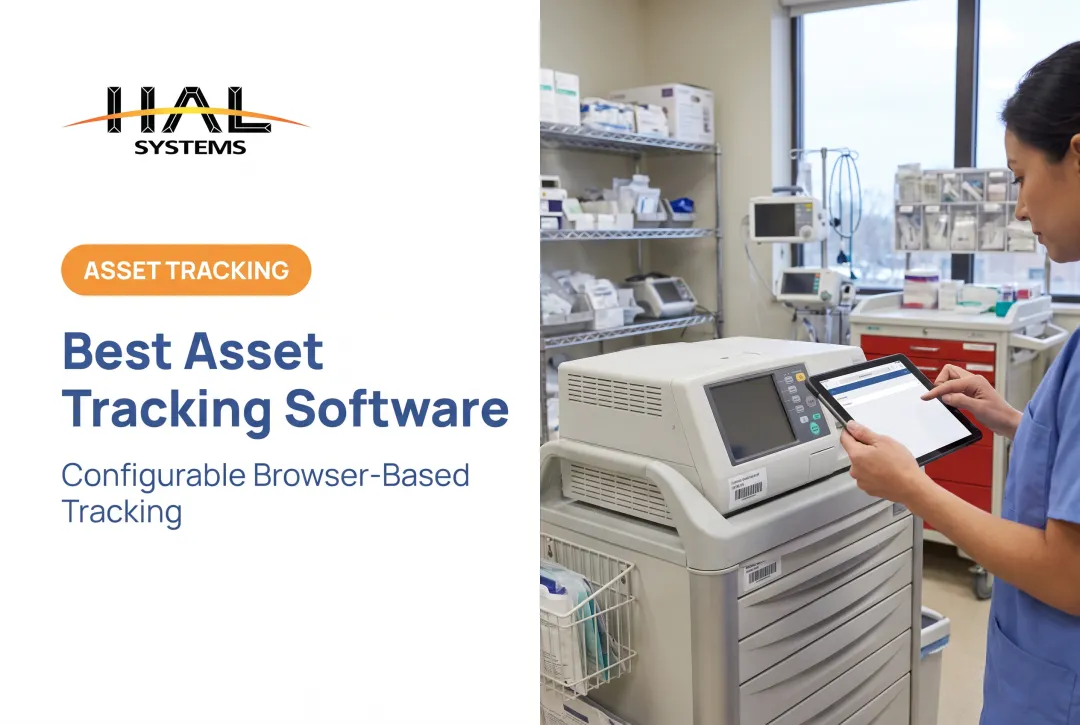
HAL Systems' HAL Traxx is built for those physical workflows. Configurable software blocks cover check-in/check-out asset tracking, warehouse inventory control, and work-in-process manufacturing management, and you can add features as operations evolve without migrating to a new platform.
It deploys on-premises or in the cloud via AWS, integrates with ERP, accounting, and shipping systems through APIs and ODBC, and tracks tools, equipment, calibration records, and service history in one system.
Before requesting a demo of any platform, figure out which problem you're actually solving: SaaS governance, or physical asset tracking. The two require genuinely different tools.
Frequently Asked Questions
How much does asset tracking cost?
Costs vary significantly depending on whether you're tracking SaaS subscriptions, equipment, vehicles, or inventory. Compare implementation fees, integrations, support, hardware needs, and whether pricing is per user, per asset, or quote-based rather than expecting one universal number.
What is an asset tracer?
An asset tracer is a person, process, or software feature used to identify an asset's location, ownership, status, or movement. SaaS platforms trace apps, users, and access; physical systems may use barcodes, RFID, GPS, or check-in/check-out logs.
What is SaaS asset management software?
It's software that discovers and manages cloud applications across their lifecycle — tracking users, owners, usage, costs, contracts, licenses, renewals, and access in one system.
What's the difference between SaaS management and IT asset management?
SaaS management specializes in cloud applications and subscriptions. Broader ITAM also covers hardware, installed software, cloud infrastructure, procurement, and CMDB relationships.
How do SaaS platforms discover applications?
Discovery typically combines SSO and identity data, finance records, HR systems, MDM tools, browser signals, and direct API integrations. Coverage and refresh frequency vary by vendor, so verify both for your environment.
Is asset tracking software the same as SaaS management software?
No. Asset tracking software like HAL Traxx typically manages physical equipment, tools, and inventory, while SaaS management software tracks digital applications, subscriptions, and user access. Choose based on what you actually need to control.