
These gaps between recorded and actual inventory create delays, wasted purchasing, and frustrated customers.
Real-time inventory tracking closes that gap. Instead of relying on end-of-day uploads or manual spreadsheet updates, it records stock quantity, location, and status the moment a transaction happens: a receipt, a pick, a transfer, a return.
This article breaks down how real-time tracking works, the benefits organizations typically see, what features matter most, and how to implement the practice. The right setup depends on your inventory complexity, not a one-size-fits-all template.
Key Takeaways
- Real-time tracking captures stock quantity, location, and status as transactions happen, not after the fact
- Accurate, current data cuts discrepancies, speeds fulfillment, and sharpens replenishment decisions
- The right system depends on SKU complexity, location count, and workflows, not a universal template
- Software alone won't fix accuracy; barcode discipline, cycle counts, and trained staff still matter
How Real-Time Inventory Tracking Works
Tracking vs. Management: Two Different Jobs
Inventory tracking and inventory management often get used interchangeably, but they do different work.
- Tracking captures what's happening to stock right now: receipts, moves, picks, adjustments
- Management uses that captured data to make decisions, including what to reorder and when to schedule production
Tracking is the input. Management is the output. A system can't manage inventory well if the underlying tracking data is late or wrong.
From Purchase Order to Put-Away, and Back Out Again
Inventory moves through a predictable sequence, and real-time systems capture a transaction at every step:
- Receiving - goods arrive against a purchase order and get logged
- Inspection and put-away - items are checked and assigned to a bin, shelf, or rack location
- Production consumption or picking - materials leave stock for a work order or customer order
- Shipment or transfer - goods move between locations or out to the customer
- Returns and adjustments - stock comes back or gets corrected for damage, loss, or count discrepancies
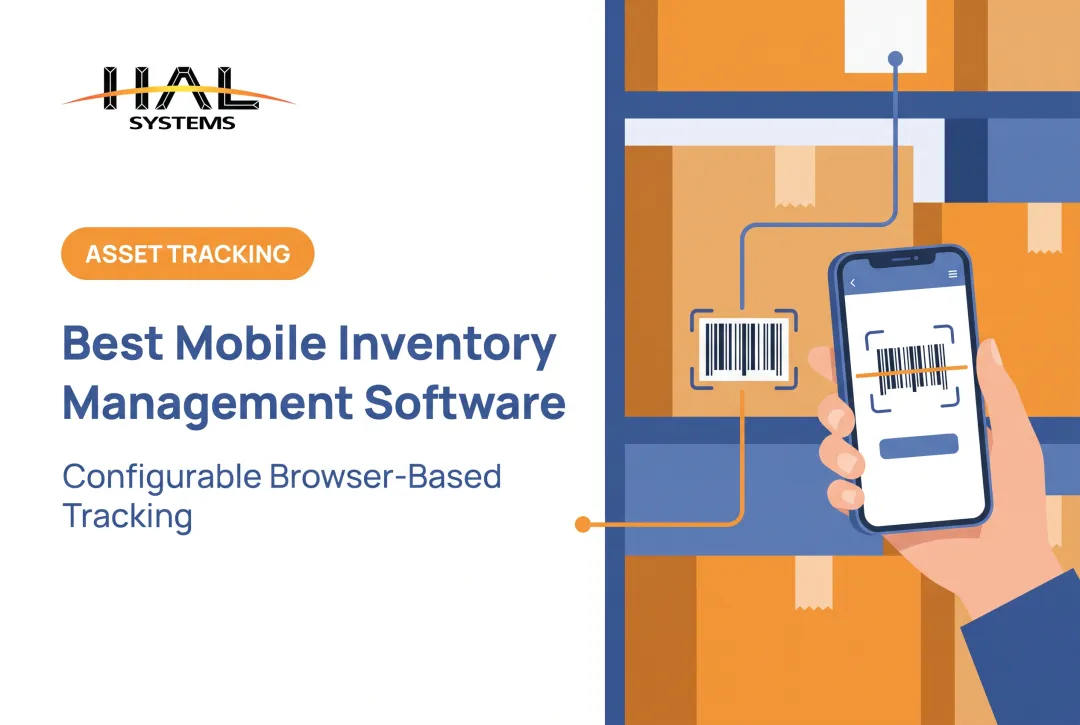
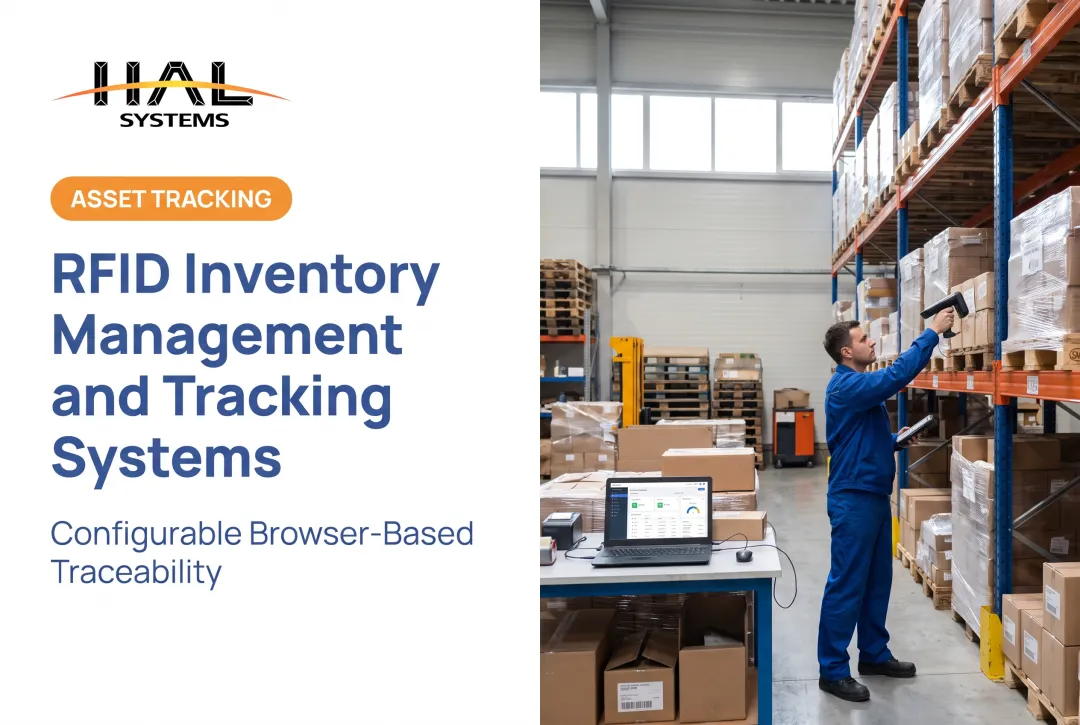
Barcode scanners, mobile computers, QR codes, and RFID readers tie each movement to a specific SKU, serial number, lot, location, user, and timestamp.
That detail feeds a central database that purchasing, warehouse staff, production, and customer service all pull from. Everyone looks at the same number instead of five different versions of it.
Integrations Keep Data Synchronized, and Alerts Catch Problems Early
None of this works in isolation. Integration with ERP, accounting, e-commerce, order management, and shipping systems prevents duplicate data entry and keeps inventory changes synchronized across connected workflows. HAL Systems builds these connections through APIs, ODBC, and transfer files so a transaction doesn't need to be re-keyed twice.
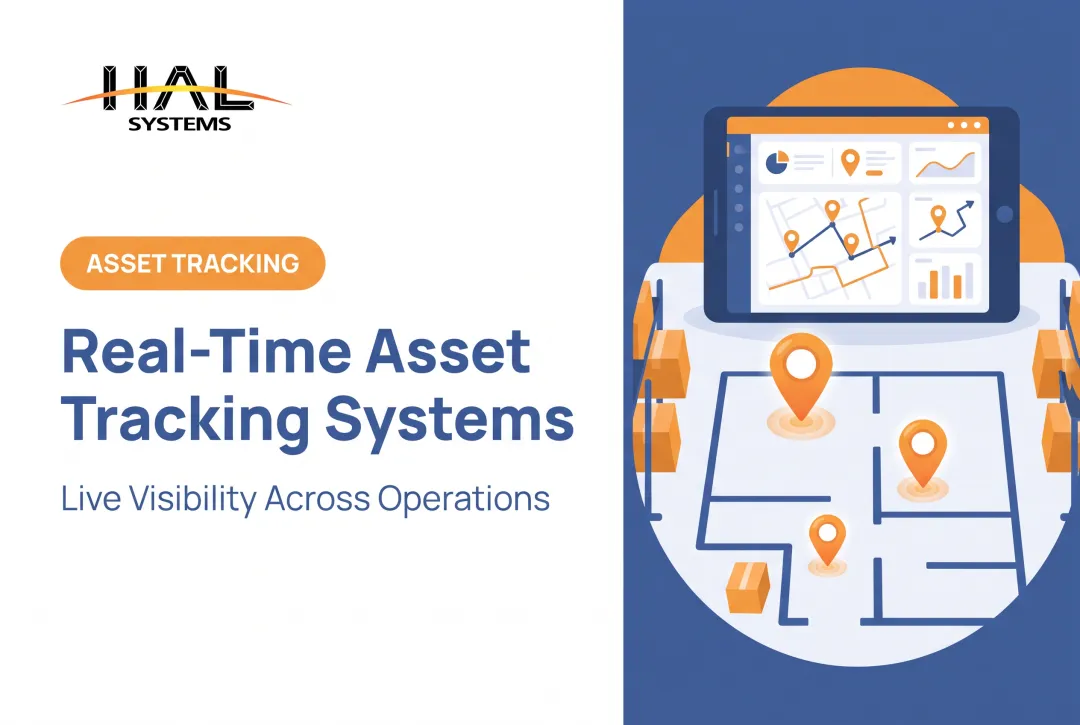
Exception reporting matters just as much. Dashboards that flag low stock, failed scans, or unexpected movements give teams a chance to fix problems before they cascade.
A peer-reviewed hospital inventory study illustrates the stakes. When system records showed 25 units on hand but the bin actually held 12, the system ordered only 5 units instead of the 18 needed, creating a near-certain stockout, according to the Health Care Management Science study. Small discrepancies compound fast when nobody catches them in time.

Benefits of Real-Time Inventory Management Systems
Accuracy Starts With Better Data, But Isn't Automatic
Current quantity and location data replaces delayed snapshots with transaction-level records, a real improvement over spreadsheets updated once a week.
But system-record accuracy and physical inventory accuracy aren't the same thing. A system can show perfectly current numbers that are still wrong if someone skips a scan or mis-shelves a pallet. Real-time tracking narrows that gap; it doesn't eliminate the need to verify it.
Fewer Stockouts, Less Wasted Motion, Faster Fulfillment
Visibility into current stock reduces:
- Emergency purchasing driven by inaccurate "we're out" alerts
- Overstocking caused by duplicate orders nobody realized were unnecessary
- Time spent walking the warehouse searching for misplaced goods
- Unnecessary transfers between locations that already had stock
Customers feel this too. Reliable availability data means fewer canceled orders, more accurate delivery promises, and clearer communication when something is backordered.
The efficiency gains can be substantial. A peer-reviewed Journal of Medical Systems study of an RFID smart-cabinet system in a hospital's cardiothoracic operating rooms found supervisory staff time on the inventory logistics chain dropped 58%, from 995 minutes to 428 minutes, after automating data capture.

The study covered three operating rooms at one hospital, so treat it as a directional example rather than a universal benchmark.
Traceability, Control, and Sharper Planning
Lot and serial tracking give organizations:
- Faster, more targeted recalls, tracing a defect back to a specific supplier batch instead of pulling everything
- Audit trails for compliance and internal controls
- Expiration monitoring for perishable or regulated goods
- Fixed-asset accountability for high-value or mission-critical equipment
Historical and live inventory data also feeds KPIs, demand planning, and supplier evaluation. Forecasts built on this data are only as good as the assumptions behind them. Real-time visibility improves the inputs; it doesn't guarantee the output.
Essential Features and How to Choose a System
Core Capabilities Worth Comparing
Not every organization needs every feature, but these capabilities are worth evaluating:
- Real-time quantity and location updates across all stocking points
- Multi-location support for warehouses, stockrooms, and job sites
- Barcode, RFID, and mobile compatibility
- Lot and serial tracking for traceability and recalls
- User permissions and audit trails for accountability
- Cycle counting, returns processing, and transfer workflows
Integration, Deployment, and the Real Meaning of "Real Time"
Integration capability deserves scrutiny before you buy. Confirm how the system connects to your ERP, accounting software, e-commerce platform, and shipping carriers (APIs, ODBC, or file transfers).
Also clarify how much ongoing effort keeps master data synchronized across systems.
Deployment choice matters too:
| Factor | Cloud-Hosted | On-Premises |
|---|---|---|
| Accessibility | Available anywhere with a browser | Typically limited to local network |
| IT responsibility | Vendor manages infrastructure | Internal IT manages servers |
| Customization | Often more standardized | Can be deeply tailored |
| Ongoing cost | Recurring subscription | Upfront license plus maintenance |
Whichever deployment model you choose, clarify what "real time" means for your operation. A basic inventory app, a full warehouse management system, an ERP inventory module, and a dedicated asset-tracking platform all define it differently.
A distributor shipping same-day orders needs a different update speed than a school district auditing fixed assets once a year.
A Practical Selection Checklist
Before choosing, map your requirements against:
- SKU volume and inventory type (raw materials, finished goods, fixed assets, or a mix)
- Number of facilities and whether they need separate or shared visibility
- Work-in-process or asset-tracking requirements specific to your industry
- Required transaction speed and user roles
- Reporting needs, implementation timeline, and total cost of ownership
HAL Systems' HAL Traxx platform is one example of a configurable approach to this problem. It's built from software blocks that combine for warehouse management, inventory control, asset tracking, or work-in-process manufacturing.
You can deploy it on-premises or in the cloud, with integration support for ERP and accounting systems. It won't fit every organization, but it shows how one configurable platform can serve different inventory complexity levels without a full platform swap as needs grow.
How to Implement Real-Time Inventory Tracking
Rolling out real-time tracking works best as a phased process, not a single flip of a switch:
- Document current workflows - map how stock actually moves today, including the workarounds nobody wrote in the manual
- Define measurable objectives - fewer stockouts, faster cycle counts, reduced manual entry errors
- Clean and standardize data - item numbers, descriptions, and location codes need to match across every connected system
- Select capture hardware - barcode scanners, mobile computers, or RFID, based on transaction volume and environment
- Configure workflows and integrate connected systems - align scan points with ERP, accounting, and shipping platforms
- Test, train, and launch with monitoring - run parallel transactions before full cutover, and watch exception reports closely in the first weeks
Accuracy Doesn't Happen by Itself
Software creates the opportunity for accuracy; people and process deliver it. ASCM's guidance on warehouse performance recommends regular database checks and cycle counting. Those practices confirm physical inventory matches system records, rather than relying on an annual full count alone, according to the ASCM warehouse KPI guide.
Practical steps include:
- Mandatory scan points at every transaction; manual overrides only with a logged reason code
- Role-based procedures so staff only see steps relevant to their job
- Exception queues that flag discrepancies for same-day investigation
- Root-cause analysis on recurring errors instead of just correcting the count
HAL Systems pairs its software with implementation services, including process optimization, system integration, configurable workflows, and training, because technology and process discipline tend to succeed or fail together.
Industry and Operational Use Cases
Real-time inventory tracking looks different depending on the operation running it.
Distributors and 3PLs use location-level, client-separated stock records to manage receiving, put-away, picking, and transfers across one or multiple warehouses. That separation matters when one facility stores goods for multiple customers under different contract rules.
Discrete manufacturers track raw materials, components, and work in process as they move from the stockroom to the production floor, scanning specific raw-material lots to specific finished-goods batches for traceability.
Other sectors apply the same core idea to different problems:
- Field service and construction - check tools and equipment in and out across crews, trucks, and job sites to cut losses from missing gear
- Healthcare - track pharmaceuticals and supplies by lot and date for regulatory compliance and patient safety
- Food and beverage - maintain lot and date control for recall readiness
- Public sector - conduct defensible, barcode-driven audits of tagged fixed assets each year
The hospital RFID study referenced earlier also demonstrates the traceability payoff directly: correct patient assignment of surgical items rose from 36.1% to 100%, and correct prosthesis assignment reached 100%, once automated scanning replaced manual logging. That's a single-site result, not a universal guarantee, but it shows what automated capture can do in accuracy-critical environments.

Frequently Asked Questions
What is a real-time inventory tracking system?
A real-time inventory tracking system captures inventory changes as they occur, updating quantity, location, status, or availability across every connected user and business system without delay.
How do you track inventory accuracy?
Accuracy is confirmed through physical counts and cycle counting, reconciled against system records. Barcode scan compliance, discrepancy investigation, and audit trails all support the process.
What are the main types of inventory management systems?
Options range from spreadsheets and manual tools to standalone inventory software, warehouse management systems, ERP inventory modules, asset-tracking systems, and configurable platforms built for specific industries.
What are SKU and KPI in inventory management?
A SKU (stock-keeping unit) is a unique code identifying an inventory item at a specific location. A KPI (key performance indicator) measures outcomes like accuracy, turnover, or fulfillment rate.
What are EOQ and ROP in inventory management?
Economic order quantity (EOQ) is the order size that minimizes total holding and ordering costs. Reorder point (ROP) is the stock level that triggers replenishment. Both depend on demand and lead-time assumptions specific to your business.
What are FIFO, LIFO, and JIT in inventory management?
FIFO and LIFO are accounting cost-flow assumptions for valuing inventory, not necessarily how stock physically moves. JIT (just-in-time) is a replenishment practice aimed at keeping inventory lean while still meeting demand on schedule.