
Product traceability is the documented ability to follow a product's origin, transformation, movement, and destination. This article covers definitions, types and levels, the technologies involved, benefits, US compliance context, and the steps to implement it.
Key Takeaways
- Traceability documents a product's history from sourcing through delivery.
- Tracking answers where an item is now; traceability explains where it came from and where it went.
- Lot, batch, or serial-level identification depends on risk, regulation, and customer demands.
- Reliable traceability needs standard identifiers, connected systems, written procedures, and mock-recall testing.
What Is Product Traceability?
GS1's Global Traceability Standard defines traceability as the ability to trace an object's history, application, or location. For products, that means material origins, processing history, and distribution after delivery.
In plain terms: you identify a product or material when it arrives, record what happens to it, and keep those records searchable and linked to work orders, inspections, shipments, and customers.
Tracking versus traceability
Tracking follows the downstream path using recorded observations. Tracing follows the upstream path to origin and history.
A warehouse example makes the gap clear. A location record says pallet 4417 sits in aisle C. Traceability records show its supplier, lot, receiving date, each storage move, the work orders that consumed it, and the customers who received the finished goods.
Product versus requirements traceability
Requirements traceability links design or business requirements to development, testing, and verification evidence. It concerns documents, not physical goods. Regulated product developers may need both, but they are not interchangeable.
What traceability connects
Typical records include:
- Supplier and purchase information
- Item identifiers, lot numbers, and serial numbers
- Quantities, timestamps, and locations
- Work orders, process steps, and inspection results
- Nonconformance records
- Packaging, shipment, and customer or distributor details
What you need depends on the product, process risk, customer contracts, and applicable US rules.
A simple example
A discrete manufacturer receives a lot of motor components, inspects it, and issues it to a work order. Those components go into finished units, which are stored and shipped to named customers.
The same records work in both directions. Backward: a defective unit leads to its component lot and supplier. Forward: a bad supplier lot leads to every finished unit and destination affected.

Types and Levels of Product Traceability
Backward and forward traceability
Backward traceability moves from a finished product toward suppliers, raw materials, prior processing, and inspections. Forward traceability follows materials or products toward production orders, warehouses, distributors, and customers.
Internal and external traceability
Internal traceability covers records inside your organization: receiving, storage, production, quality, rework, and shipping.
External traceability exchanges identifiers and event data with suppliers, carriers, contract manufacturers, and distributors. GS1 describes the common minimum as one step back and one step forward, where each party knows its direct suppliers and recipients.
Lot and serial levels
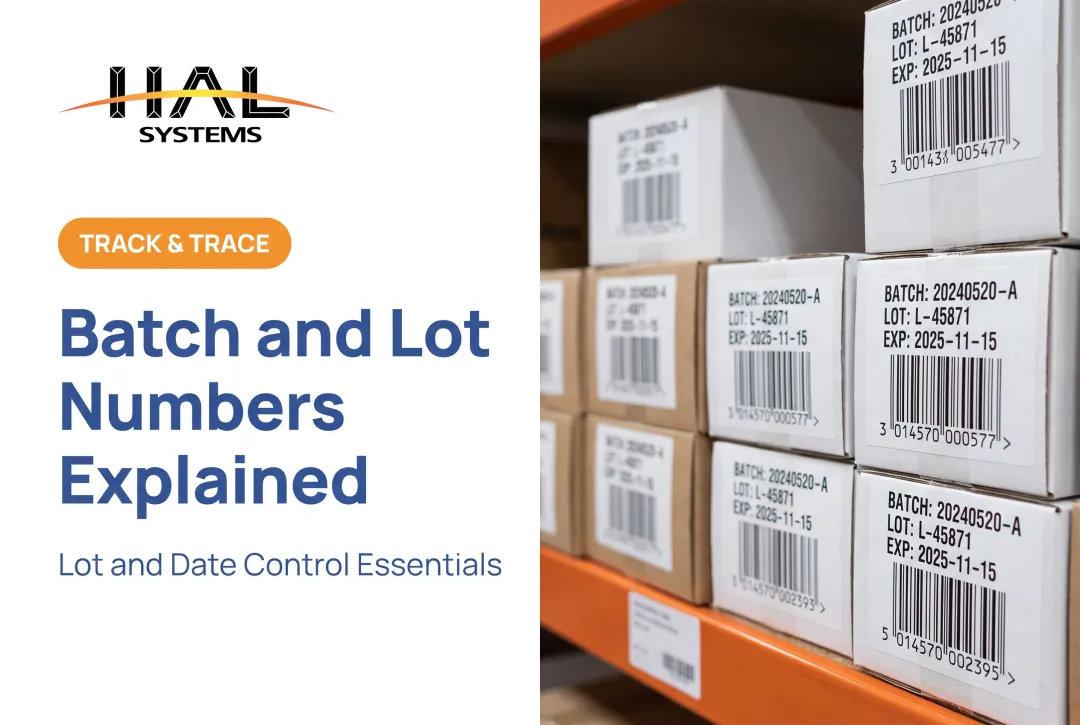
Per GS1, a product identifier (GTIN) alone identifies a product type. Adding a lot number identifies a batch. Adding a serial number identifies a single unit.
- Lot-level suits food, chemicals, and production runs. Define lot boundaries up front, and record every split, merge, repackaging, and transformation so relationships survive.
- Serial-level gives precise service, warranty, and recall histories for high-value or safety-critical products, but demands more data and stricter discipline.
Neither level replaces linked event records. An identifier alone is not a complete traceability record.
End-to-end traceability and chain of custody
End-to-end traceability connects events from origin through delivery rather than limiting the view to one department. Chain of custody documents the parties, transfers, handling, and control points a material passes through, including whether segregation or mixing affects traceability.
Choosing the right level
Weigh these factors:
- Product risk and recall impact
- Regulatory and customer requirements
- Product value and shelf life
- Process complexity
- Whether items are interchangeable
Don't collect more data than you can keep accurate. Define the minimum reliable dataset first, then expand as processes mature.
How Does Product Traceability Work in Practice?
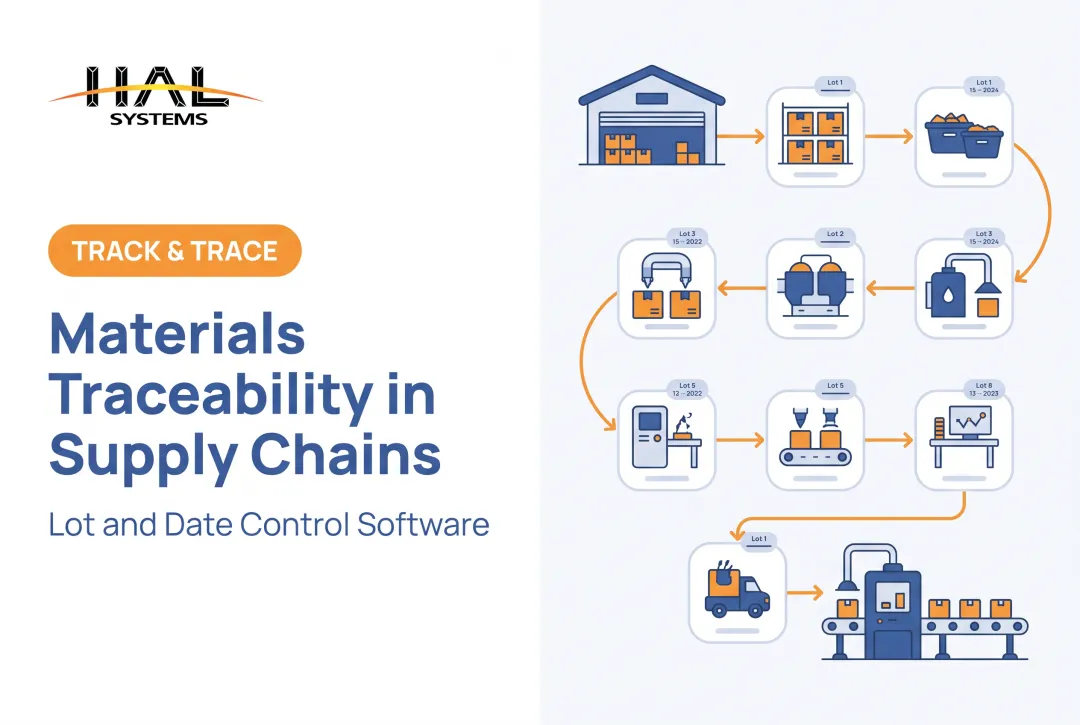
The workflow from receiving to shipment
- Receive and identify materials.
- Inspect and quarantine if needed; keep raw materials out of production until quality control approves them.
- Capture or assign lot or serial identifiers.
- Store and move inventory.
- Issue materials to work orders.
- Record transformations and quality checks.
- Package finished goods.
- Link shipments to destinations.

At every handoff, preserve the link between the original identifier and any new lot, serial number, or finished product.
Technologies that capture the data
- Barcodes and 2D codes: GS1 DataMatrix can carry GTIN, lot, expiry, and serial data.
- RFID: needs no line of sight, but GS1 US recommends testing tag types and placement because product contents can block signals.
- Direct part marking: suits parts where labels won't survive.
- Mobile scanners and label printers: put capture at the point of work.
Material, environment, scan volume, durability, and budget drive the choice. ERP, WMS, manufacturing, and quality systems can share identifiers, but software cannot fix bad source records.
In FDA's traceability tabletop exercises, 15 companies with existing systems still produced inconsistent data, and only 40% properly assigned traceability lot codes for every relevant event.
Searchable records and recall readiness
You need two searchable paths:
- Start with an input lot and find every affected product and destination
- Start with a finished product and find its inputs, processes, inspections, and shipments
Support both with role-based access, timestamps, audit history, data validation, exception handling, and a documented retention policy.
Why Does Product Traceability Matter, and Where Is It Used?
Operational, quality, and financial benefits
- Targeted recalls instead of broad ones
- Faster containment and root-cause analysis
- Cleaner nonconformance investigations
- Better warranty and service decisions
- More accurate inventory
The stakes show up clearly at scale. FDA's investigation of the 2023 cantaloupe Salmonella outbreak reported 407 illnesses, 158 hospitalizations, and six deaths across 44 states. That figure shows outbreak scale, not the benefit of any one system.
On the operations side, HAL Systems reports that its Track & Traceability can reduce direct labor for inventory transactions by 25–65%. Its scan-to-batch approach links specific raw-material lots to finished-goods batches.
Compliance, audit readiness, and customer confidence
Obligations vary by industry, product, contract, and regulator:
- Food: FSMA Section 204 requires additional records for foods on the Food Traceability List, often within 24 hours. Original compliance was January 20, 2026; FDA has proposed extending it to July 20, 2028, and Congress has directed no enforcement before then.
- Raw ground beef: USDA FSIS requires supplier, lot, and grinding records.
- Medical devices: FDA's UDI system requires device identifiers and, where applicable, lot or serial data on labels.
- Drugs: DSCSA requires package-level electronic tracing for certain prescription drugs.
Software alone does not guarantee compliance. Consult qualified compliance or legal professionals for your industry.
Industry examples
- Food and beverage: Ocean Mist Farms used GS1-128 labels linking cases to crew, block, and field. It reports meeting its own two-hour goal for locating shipped cases in a lot (company-reported, not a benchmark).
- Discrete manufacturing: CPSC's February 2025 recall of roughly 500,000 LG electric ranges identified affected units by model and serial ranges.
- Distribution and 3PL: Providers preserve client, location, lot, and shipment relationships, often under client-specific contract rules.
Asset and field-service tracking uses similar identification and movement records, but it is an adjacent use case, not automatically product traceability.
How to Implement Product Traceability
Define scope, objectives, and risk
List the products, materials, facilities, suppliers, and customers that must be traceable. Name the objective: recall readiness, compliance, quality improvement, or inventory control. Start with high-risk product lines.
Set identifiers, data fields, and rules
Decide where you need item, serial, batch, or lot identification. Define how identifiers are created, received, changed, split, merged, consumed, reworked, and retired.
Then build a data dictionary covering:
- Required fields and owners
- Acceptable values
- Retention and correction procedures
- What suppliers and contract manufacturers must provide
Install control points and procedures
Capture data at these control points:
- Receiving and inspection
- Put-away, picking, and production issue
- WIP transfer and quality release
- Packaging, shipping, returns, and disposal
Document scanning, labeling, quarantine, and rework procedures. Train people to record events when they happen, not reconstruct them later.
Connect systems and evaluate options
Audit your ERP, WMS, manufacturing, quality, and shipping systems for shared identifiers and integration paths. Address spreadsheet dependence first. Many operations keep records manually, with IT systems covering only parts of the process.
Small and mid-sized manufacturers and distributors can evaluate configurable platforms such as HAL Traxx from HAL Systems. It supports barcode, RFID, and manual input, plus ERP, accounting, and shipping interfaces through APIs, ODBC, or transfer files.
Verify any product against your documented requirements. Do not replace a platform that already meets those needs.
Test, measure, and improve
Run documented mock recalls in both directions. Trace a supplier lot forward to finished products and destinations, then a finished unit backward to inputs, process history, inspections, and shipments.
Log gaps as you find them:
- Missing scans
- Duplicate identifiers
- Unlinked records
- Delayed data
- Inconsistent supplier information
Assign corrective actions and retest after changes. SQF requires at least annual testing, with one step back to incoming materials and one step forward to customers.
Useful measures include record completeness, lot-code linkage, retrieval time, and exception rates. Set targets that fit your operation instead of copying generic industry averages.
Frequently Asked Questions
Is traceability a legal requirement?
It depends on industry, product, regulator, and contract. FDA food, device, and drug rules, USDA FSIS beef rules, and CPSC children's product labeling each have distinct scopes and exceptions. Not every business faces the same obligation.
How to do traceability in the food industry?
Identify suppliers and ingredients, assign lot codes, and record key processing, packaging, and shipping events. Keep records per FDA rules (generally two years under Subpart S) and run mock recalls at least annually.
What is the difference between product tracking and product traceability?
Tracking shows current location or status. Traceability reconstructs a product's documented history: origin, transformations, movements, and destinations.
What information should a product traceability system record?
Identifiers, suppliers, dates, quantities, locations, work-order links, inspections, quality events, shipment details, and customer or destination information, as applicable to your product and risk.
Can small manufacturers implement product traceability without replacing their ERP?
Often yes. Start with defined control points, barcode or mobile capture, and integrations to the existing ERP, rolled out in phases. Data standards and process discipline matter more than replacing the system.