
Introduction
Most inventory teams know how many units they have. Far fewer can answer the harder questions: which exact unit shipped to a customer last March? Who received it? Is it still under warranty? Has it been serviced, returned, or scrapped?
That gap between "how many" and "which one" is where serial number tracking software comes in. It links each item's unique identifier to every movement, transaction, customer, and status change across its life.
This guide covers what serialized inventory tracking actually involves, where it pays off, how to roll it out, and what to look for in a platform. We'll also look at how configurable systems like HAL Traxx support distributors, manufacturers, warehouses, and field service teams who need this level of detail without a bloated enterprise price tag.
Key Takeaways
- Serialized inventory assigns a unique ID to each physical unit, not just a product type or batch.
- High-value, regulated, warrantied, or theft-prone items benefit most from serial tracking.
- A full record covers receiving, movement, service, returns, and disposal, not just the number itself.
- Look for software with barcode/RFID support, searchable history, audit trails, and solid integrations.
- Configurable platforms can scale from a single warehouse to multi-site, multi-workflow operations.
What Is Serial Number Tracking Software for Inventory Management?
A serial number identifies one physical item. Serial tracking software turns that static label into a searchable digital history: every scan, transfer, and status change tied to that specific unit over its entire lifecycle.
That's different from how most companies track inventory day-to-day.
| Tracking level | Identifies | Typical question answered |
|---|---|---|
| SKU | A product type | How many units of this product do we have? |
| Lot/batch | A production group | Which units came from this production run? |
| Serial number | One physical unit | Where is this exact item, and what happened to it? |
A barcode or QR code is worth clarifying here, too. It's just a machine-readable carrier: it can encode a serial number, a SKU, a lot number, or other data. The barcode itself isn't the tracking process; it's the input mechanism feeding data into a system that does the actual tracking.
The Serialized Inventory Lifecycle
A typical unit moves through these stages:
- Assignment or import: manufacturer-issued or internally generated
- Receiving: scanned against a purchase order
- Storage and movement: location updates as it moves
- Production association: linked to a work order if applicable
- Shipment or issue: tied to a sales order, job, or employee
- Post-sale record: warranty, service history, returns, disposal
Each step should connect back to data like supplier, condition at receipt, warehouse/bin location, customer or employee assignment, and warranty dates.
When Serial Tracking Makes Sense
Not every item needs individual scanning. Use this quick checklist:
- Is the item high-value or expensive to replace?
- Does it carry a warranty or require service history?
- Is it subject to regulatory traceability (medical devices, pharmaceuticals)?
- Is it prone to theft or loss?
- Can staff realistically scan each unit without slowing operations?
If you answered yes to two or more, serial tracking likely beats lot or quantity tracking. GS1's traceability standard distinguishes a trade item, a lot, and a serialized item precisely because each level answers a different operational question. Mixing them up creates confusion fast.
For a distributor managing hundreds of similar-looking pumps or electronics, that distinction matters. A single serial lookup can show current location, shipment history, and service status instead of cross-referencing three spreadsheets and a filing cabinet.
What Are the Benefits of Serial Number Tracking?
Unit-level traceability changes what "inventory accuracy" actually means. Instead of knowing you have 40 units in stock, you know which 40, and whether any are reserved, in transit, damaged, or already written off.
Tighter Receiving, Picking, and Counting
When every item has a scannable identity, staff validate the exact unit at each touchpoint:
- Receiving confirms the physical item matches the purchase order
- Picking prevents substituting the wrong unit for an order
- Cycle counts reconcile specific serials against system records, not just totals
Faster Warranty, Returns, and Repairs
Staff can pull up sale date, ownership, coverage status, and prior repair history in seconds, without digging through paper files to confirm whether a returned unit is still under warranty.
Recall and Quality Response
This is where serialization earns its keep in regulated industries. The FDA's device guidance ties production identifiers (lot, batch, or individual serial number) directly to recall and investigation records. FDA's DSCSA guidance also requires package-level tracing that can be retrieved during a recall or suspect-product investigation.
In practice, that means tracing backward from a defective unit to its supplier or work order, then forward to every other affected unit and customer within minutes.

Theft and Fraud Deterrence
Comparing a physical serial number against system records (ownership, shipment history, current status) makes it harder to swap counterfeit parts or push through a fraudulent return. It won't eliminate loss, but it closes an obvious gap.
Operational Reporting
Serial-level data feeds reports that matter for continuous improvement:
- Recurring defect patterns by supplier or production run
- Repair frequency by asset or product line
- Items that are overdue for return or sitting idle
- Discrepancies between physical counts and system records
Any performance claim tied to these reports should come from your own baseline measurements, not an assumed industry average. Results vary too much by category and process maturity to generalize.
How to Implement Serial Number Tracking in Inventory Operations
Rolling out serial tracking works best as a phased project, not a flip of a switch.
- Assess scope. Identify which products, tools, or assets actually need serialization, and map every point where the identifier must be captured: receiving, storage, production, shipping, and service.
- Set a numbering policy. Decide whether you'll preserve manufacturer-assigned serials, generate internal numbers, or support both. Clarify how retired or scrapped numbers are handled and who can correct a record.
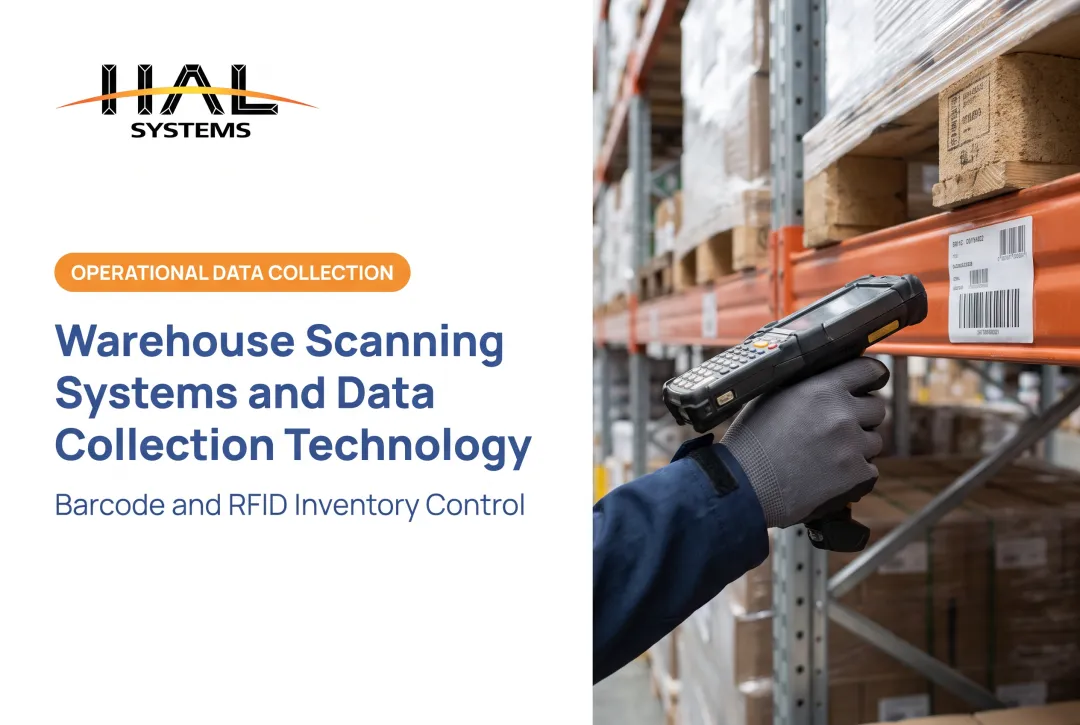
- Choose your capture method. Barcodes, QR codes, RFID, and direct part marking each suit different environments:
| Method | Best for | Watch out for |
|---|---|---|
| Barcode/QR | Most warehouse and retail items | Requires line-of-sight scanning |
| RFID | High-volume, fast-moving stock | Higher hardware cost |
| Direct part marking | Harsh environments, small parts | Durability vs. readability tradeoffs |
- Configure core workflows. Receiving, put-away, transfers, picking, shipment, issue-to-person, return, repair, quarantine, cycle count, and disposal all need defined steps.
- Pilot before scaling. Test one product line or warehouse first, including exceptions like unreadable labels, missed scans, and duplicate numbers.
- Train by role. Each team member should know exactly which actions affect data quality.
- Audit regularly. Reconcile physical items against system records on a set cadence.

On that last point, don't assume a universal accuracy target applies to your operation. ISM's 2024 benchmark found average inventory accuracy around 91%, with lower-performing companies closer to 67%, a wide enough range that measuring your own baseline matters more than chasing someone else's number.
HAL Traxx's Track & Traceability application reflects this same phased logic. It automatically maintains records from source materials through process movement to customer delivery, giving teams one continuous audit trail instead of stitching together receiving logs and shipping records separately.
Choosing Serial Number Tracking Software
A feature checklist only gets you so far. Build your evaluation around how the software actually handles your products and exceptions.
Core capabilities to verify:
- Individual-unit records with real-time status and location
- Barcode and/or RFID scanning, plus label printing
- Mobile access for warehouse and field staff
- Bulk import and duplicate prevention
- Searchable history and audit trails
- User permissions and exception handling
Workflow connections that matter:
- Purchasing and receiving
- Warehouse and work-in-process
- Sales, shipping, and returns
- Warranty and field service
- Fixed-asset management
Deployment and integration questions:
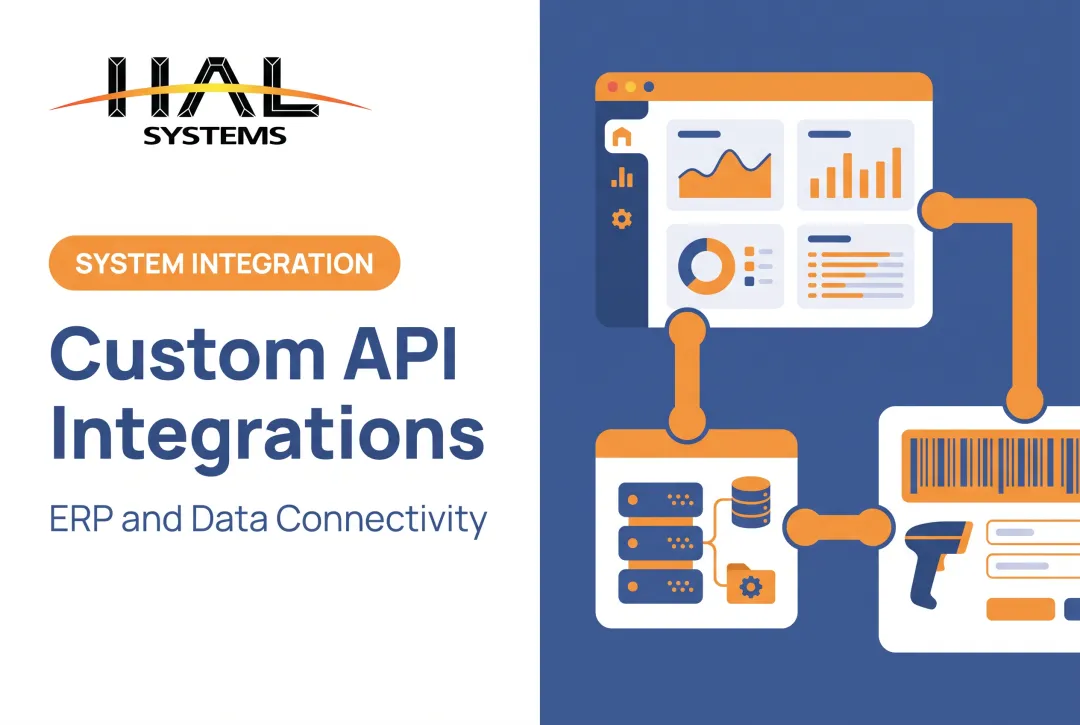
- Does it integrate with your ERP, accounting, or eCommerce systems via API, ODBC, or transfer files?
- Cloud or on-premises: which option fits your IT capacity and security requirements?
- What's the actual total cost: licensing, hardware, training, data migration, and future configuration changes?
Request a demo using your own products, serial formats, and exception scenarios, not the vendor's canned example.
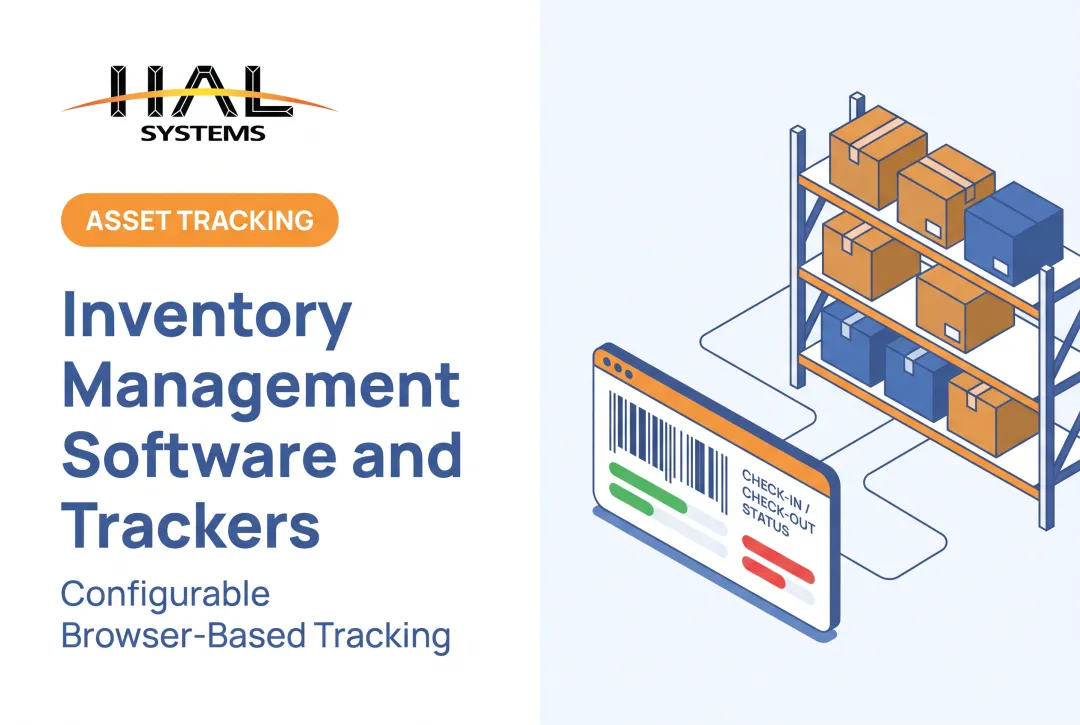
HAL Traxx is built from configurable software blocks. Workflows like Inventory Control, Check In/Check Out, and Track & Traceability can be assembled around how your operation actually runs, rather than forcing your process into a rigid template.
How HAL Traxx Can Support Configurable Inventory Tracking
HAL Systems has been building business software since 1983, with HAL Traxx as its core configurable platform, assembled from integrated software blocks rather than a single fixed product.
That matters for serial and traceability work because requirements vary so much by industry:
- Manufacturers use HAL Traxx to track serialized components through production and link raw material lots to finished-goods batches.
- Warehouses and distributors use Inventory Control to automate receiving, orders, and deliveries, with a business-partner portal for shared visibility.
- Field service and construction teams use Check In/Check Out to track tool location, checkout time, and whether equipment is cleared for use based on calibration or repair status.
- Asset-intensive organizations use Asset Tracking for calibration records, condition history, and repair parts/hours.
Track & Traceability maintains a continuous record from source materials through production movement to customer delivery: the kind of audit trail needed for recall response or supplier-quality investigations. Because HAL Traxx runs in a browser on Windows, iOS, Android, or Linux devices, teams aren't locked into specific scanner hardware.

Deployment is flexible: on-premises or cloud, with licensing available as an upfront purchase plus annual support, or as an annual SaaS fee. Integration with ERP, factory automation, shipping, eCommerce, and accounting systems is handled through APIs, ODBC, or transfer files built by HAL's in-house team.
What often sets the implementation apart is the process work around the software. HAL Systems' team brings Lean and Six Sigma experience to configuring workflows, not only installing them, and support comes from local resellers plus the people who built the platform.
If your serial-tracking needs are unusual (a mix of regulated products, field assets, and production components), that's a conversation worth having directly. Reach out to HAL Systems to walk through your product types, scanning environment, and integration needs before committing to a platform.
Frequently Asked Questions
How do I keep track of serial numbers?
Assign or capture a unique number for each unit, scan it at receiving and every key movement, and store location, status, and transaction history in one centralized system — not spreadsheets or paper logs.
What is serialized inventory?
Serialized inventory tracks each item individually by unique serial number, as opposed to SKU-level tracking (counts by product type) or lot tracking (grouped by production batch).
What is the easiest way to count inventory?
Barcode-assisted cycle counts or mobile scanning connected to inventory software is the most reliable method, with clear procedures for handling exceptions, duplicate scans, and missing items.
Can stolen items be tracked by serial number?
A serial number can help match recovered equipment to ownership records, but recovery depends on accurate registration, transaction history, and cooperation with law enforcement or equipment registries.
What is the best software for inventory management?
It depends on your serial or lot requirements, warehouse and production workflows, integrations, and budget. Compare platforms through a live demo using your actual products and processes, not a generic feature list.
Can I use Excel to track inventory?
Excel can work for a small, simple register, but dedicated software is generally better once you need concurrent users, barcode scanning, audit trails, permissions, and multi-location visibility.