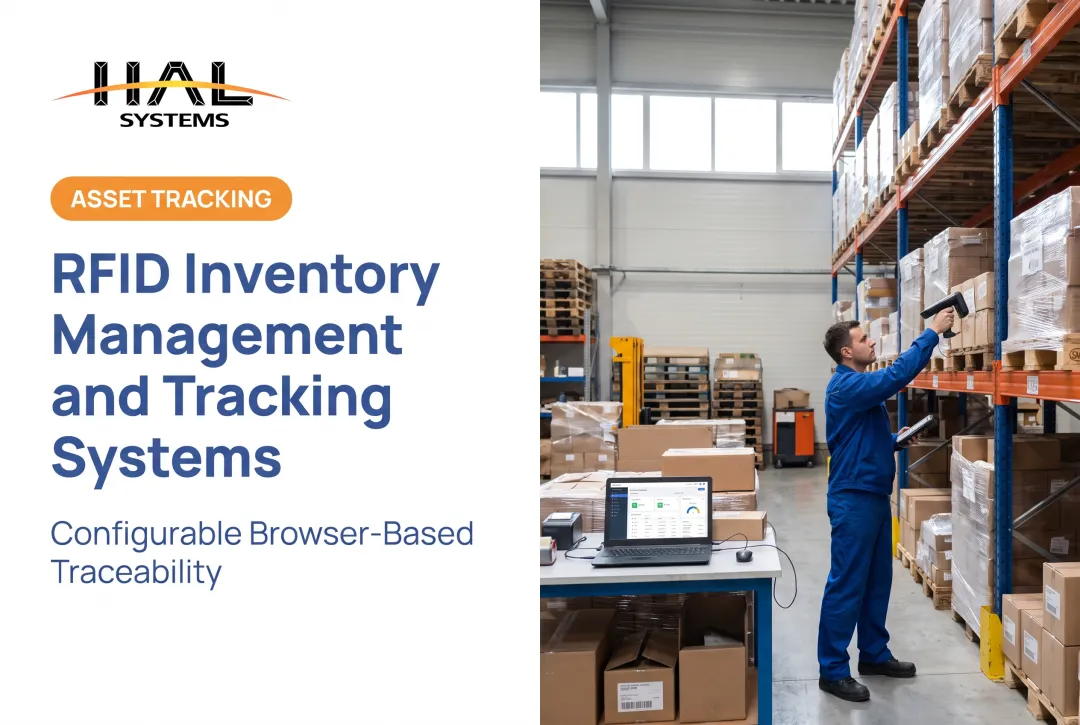
RFID (radio frequency identification) addresses these gaps. It uses radio signals, tags, readers, and software to identify materials, products, tools, and equipment with far less manual scanning. GS1 US lists work-in-process, inventory, tools and assets among its manufacturing uses.
This guide covers how RFID works, where it fits on the floor, how it compares with barcodes, and how to plan an implementation.
Key Takeaways
- RFID links physical items to digital records from receiving through shipping.
- It pays off when aimed at a specific visibility problem, not adopted as a tech project.
- Combine RFID with barcodes, each where its cost and strengths fit.
- Success depends on tags, reader placement, integration, process design, and worker buy-in.
What Is RFID in Manufacturing and How Does It Work?
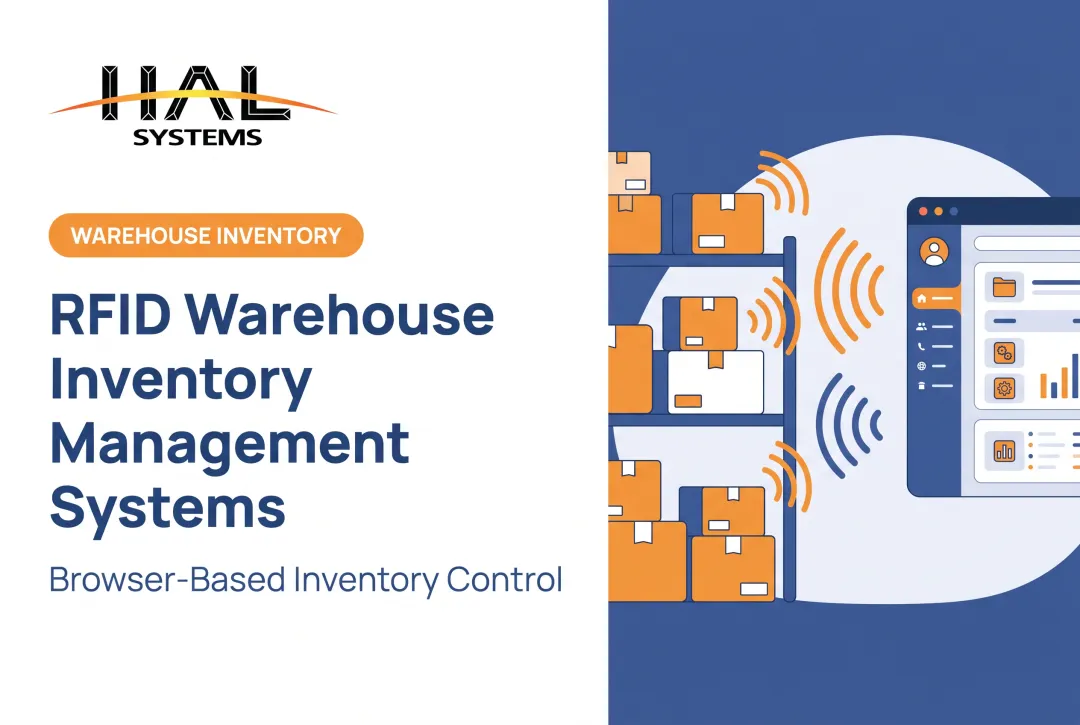
RFID is an automatic identification and data-capture technology. A tagged object, a reader, and a business application exchange data over radio waves. No line of sight is needed, and a properly designed read zone can capture several tags at once.
RFID Tags and Tag Types
Tags come in three types:
- Passive: no battery; powered by the reader's signal. Cheapest and most common for parts, pallets, and containers.
- Semi-passive (battery-assisted): a battery runs the tag's electronics or sensors, but it still responds by backscatter.
- Active: battery-powered with its own transmitter. Suited to high-value assets over long distances, at higher cost.
Range varies by frequency. Low frequency reads at roughly 3 inches or less, and passive HF at under 4 inches. Passive UHF can reach several feet, and RAIN RFID materials describe reads up to about 50 feet. Those are upper limits. Actual range depends on the tag, antenna, mounting, and surroundings.
A tag usually holds a unique identifier, sometimes with user memory. The real record (lot, work order, status, maintenance history) lives in connected software.
Readers, Antennas, and Read Zones
- Handheld readers for spot checks, cycle counts, and receiving
- Fixed readers and portals at docks, doorways, and conveyors
- Printers/encoders to create tags on demand
- Mobile computers that pair readers with work instructions
Reader placement decides whether you get a reliable movement event. Configure antennas into logical read zones, then test for missed reads and stray reads from neighboring areas. There is no universal acceptable read rate, so set your own criteria and tune power, antenna angle, and activation conditions until the zone meets them.
The Software Workflow
- Tag the item.
- Read the tag at a defined point.
- Match the identifier to a business record.
- Update location or status.
- Make that data available for inventory, WIP, quality, maintenance, or shipping decisions.
Without integration with ERP, MES, WMS, or asset systems, RFID data just sits in a reader database. Value comes when a read triggers an action.
Environmental Considerations
Metal reflects and absorbs RF energy, which is why on-metal tag designs exist. Liquids detune UHF antennas. Heat, chemicals, abrasion, and nearby RF equipment all matter too.
Ratings are model-specific: HID's Volcano tag, for example, is an LF tag with a manufacturer-stated peak of 200°C (392°F). Check the exact datasheet and test on your actual parts.
RFID Applications Across Manufacturing Operations
Think of these as one connected flow, from dock to truck, not separate projects.
Raw-Material Receiving and Inventory Management
RFID can identify inbound pallets, verify container contents, support put-away, and improve location records. Cycle counting shrinks from a walk-and-scan chore to a quick sweep.
Tagging level matters:
- Pallet or container level: cheapest, good for bulk and returnable containers
- Case level: useful for component cartons
- Item level: reserved for serialized or high-value parts
Work-in-Process and Production Tracking
Tags on carriers, subassemblies, or job travelers record movement between stockroom, work cells, inspection, and finished goods. Current status exposes stalled jobs, missing components, bottlenecks, and routing deviations.
A tag read shows where something is. It doesn't prove an operation was performed, so pair reads with process logic.
Kitting, Sequencing, and Assembly Verification
In mixed-model or custom work, a read at the workstation can confirm the right kit arrived. For example, a carrier enters a cell, the reader identifies the job, and the system pulls up the matching work instructions. A mismatched component raises an alert before assembly starts.

Fraunhofer's vehicle-manufacturing pilot tagged side mirrors and seats and described automatic inspection of safety-critical parts.
Quality Control and Traceability
Associate materials, operators, equipment, and inspection events with a lot, serial number, or work order. That supports nonconformance handling, rework decisions, audit preparation, warranty investigation, and targeted recalls. RFID supplies event data. It doesn't guarantee compliance on its own.
Tools, Equipment, and Maintenance
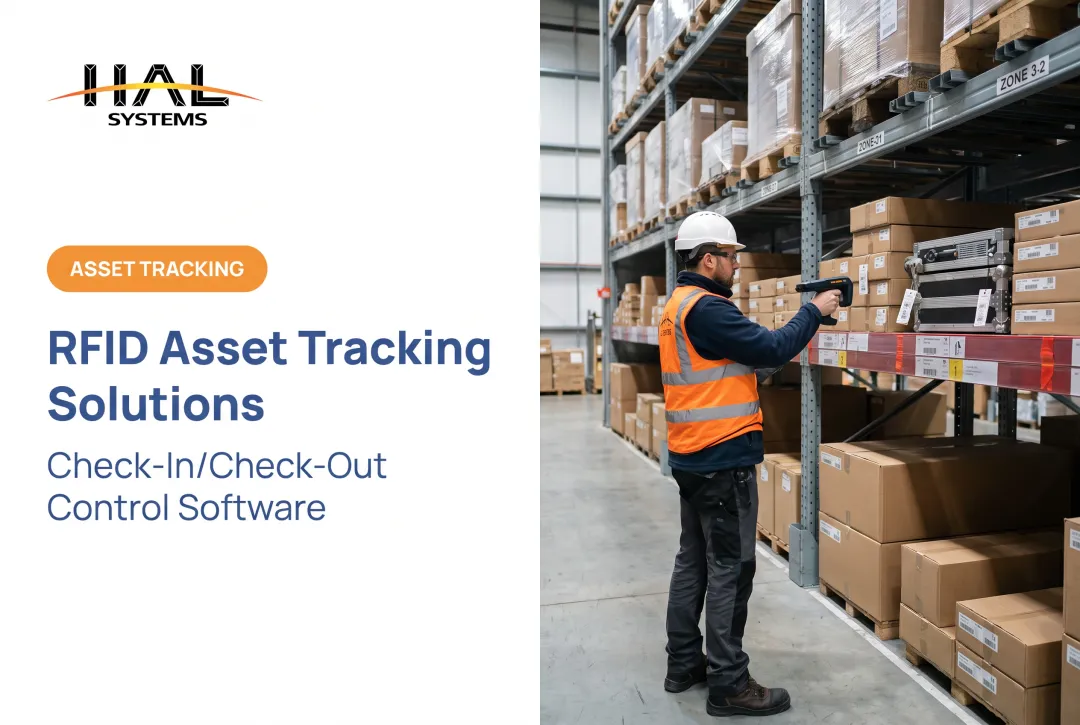
Shared tools, fixtures, molds, gauges, and test equipment are frequent loss items. RFID check-in/check-out records who has what, links usage to the asset record, and flags service intervals. It also reveals underused or misplaced equipment. A read alone doesn't confirm calibration was completed, so keep that record in software.
Finished Goods, Shipping, and Supply Chain Visibility
Reads confirm finished-goods identity, support staging and loading, and give visibility as product moves to warehouses and distributors. Handoffs with suppliers, contract manufacturers, and 3PLs need agreement up front on tag standards and data ownership. GS1's EPCIS standard offers a common format for sharing those events.
Benefits of RFID in Manufacturing
RFID pays off in fewer touches, fresher data, and clearer decisions:
- Fewer manual touches: less transcription, less re-entry, less searching and counting
- More timely records: inventory and production data reflect the floor now, not last shift
- Better decisions: replenishment, scheduling, labor allocation, maintenance planning, and shipment verification all improve with current location and status
- Faster root-cause analysis: clearer handoffs and audit trails show recurring delays
Evidence is more modest than vendor brochures suggest. A peer-reviewed 2010 case study of an automotive supplier found RFID could keep inventory inaccuracy at a minimum without reporting a universal percentage. Fraunhofer's pilot reported saved time and labor without a controlled benchmark.
Treat published figures as direction, and set your own baseline.
HAL Systems reports that direct labor for inventory transactions is typically reduced by 25-65% with automated data capture. That figure is the company's own, so validate it against your process.

RFID Versus Barcodes and QR Codes in Manufacturing
| Factor | RFID | Barcode/QR |
|---|---|---|
| Capture | Radio; no line of sight, multi-tag reads possible | Optical; needs a visible symbol |
| Distance/speed | Varies by frequency, tag, antenna, surroundings | Depends on symbol size, optics, focus |
| Data capacity | Varies; user memory optional | QR holds up to 7,089 numeric characters |
| Cost | Tags, readers, antennas, integration | Low-cost printed labels |
| Limits | Metal/liquid effects, interference, testing needed | Line of sight, damaged labels |
RFID Limitations
- Higher per-item cost
- Metal and liquid interference
- Reader infrastructure to buy and maintain
- Orientation sensitivity
- Mandatory testing in your own facility
A Hybrid Strategy
Use RFID where hands-free, bulk, or location-sensitive tracking justifies the spend. Keep barcodes or QR codes where low cost, human-visible verification, or simple document access matters more. GS1 publishes an RFID and barcode interoperability guideline for exactly this mix.
How to Implement RFID in a Manufacturing Facility
Begin With the Operational Problem
Pick one focused use case. Document the current process, capture a baseline, name stakeholders, and define success criteria before looking at tags. Good pilot candidates:
- Receiving
- High-value tools
- Reusable containers
- A short WIP route
- Kitting
- Finished-goods shipping
Prioritize where manual data capture has a visible cost or delay.
Map the Process and Choose the Identification Approach
Map item movement, decision points, read zones, exception paths, and data ownership. Then decide what to tag: parts, containers, pallets, tools, or work orders. Tag selection covers:
- Passive versus active, and frequency
- Read range and memory
- Attachment method, size, and reusability
- Printing or encoding needs
- Tolerance for metal, liquids, heat, chemicals, and abrasion
Design the Hardware and Software Architecture
Plan the architecture around:
- Reader locations, handhelds, and printers
- Network connectivity and security
- Permissions and exception handling
Not every process needs fixed readers. A handheld may do the job for a fraction of the cost.
Reads must trigger business actions in inventory, WIP, asset, quality, ERP, MES, or WMS records. HAL Traxx from HAL Systems is one configurable platform for inventory, asset tracking, and WIP workflows.
It accepts barcode, RFID, lookup, and manual input, and integrates with existing systems through APIs, ODBC, or transfer files. Confirm exact RFID reader and tag compatibility with the vendor before you commit.
Pilot, Train, and Improve
- Test tags and readers in the real environment
- Measure expected versus actual reads, including misses and unintended reads
- Involve operators who know the physical workflow
- Write procedures for damaged tags, label replacement, and equipment maintenance
- Assign data-quality ownership and a fallback process for downtime
RFID Journal advises defining pilot site, product, method, and success criteria, then adjusting based on results.
Scale Based on Evidence
Compare pilot results to your baseline on labor time, inventory accuracy, search time, delays, error rates, downtime, traceability, and total cost.
Expand in phases. Standardize tag and naming conventions, document integrations, and use Lean or Six Sigma methods to remove the waste the new data exposes.

Conclusion
RFID goes beyond a barcode scan. It creates timely, connected information about materials, WIP, tools, equipment, quality events, and finished goods.
Start with one measurable visibility problem. Test in your actual operating environment, feed the data into daily workflows, and expand only when the pilot proves its value.
Frequently Asked Questions
What is RFID used for in manufacturing?
Inventory, work-in-process, tool and asset tracking, quality traceability, maintenance, production sequencing, and shipping visibility. Each ties a physical item to a digital record.
How does RFID improve inventory management?
It automates identification, cuts manual counting, and improves location records. It also supports receiving, cycle counting, and replenishment visibility.
Can RFID track work-in-process manufacturing?
Yes. Tags on components, carriers, subassemblies, or job travelers record movement and status across stages. Software logic must tie each read to the right process step.
Is RFID better than a barcode in manufacturing?
For bulk, automated, non-line-of-sight, or location-sensitive tracking, yes. Barcodes stay useful for low-cost, visible identification, and many plants use both.
What type of RFID tag is best for manufacturing?
It depends on read range, frequency, material, power needs, and attachment method. Metal, liquids, heat, chemicals, and abrasion all narrow the choice, so test candidates on real parts.
How should a manufacturer start an RFID implementation?
Choose one use case, baseline the process, and test in the actual environment. Then pilot, integrate the software, train employees, and measure against defined goals.