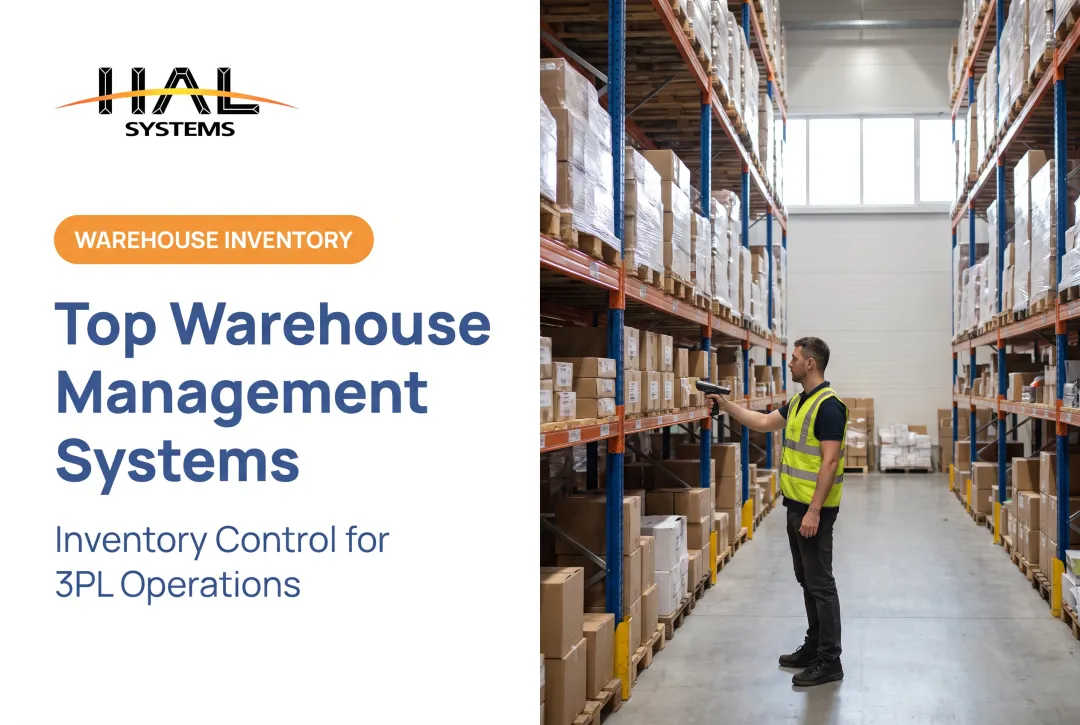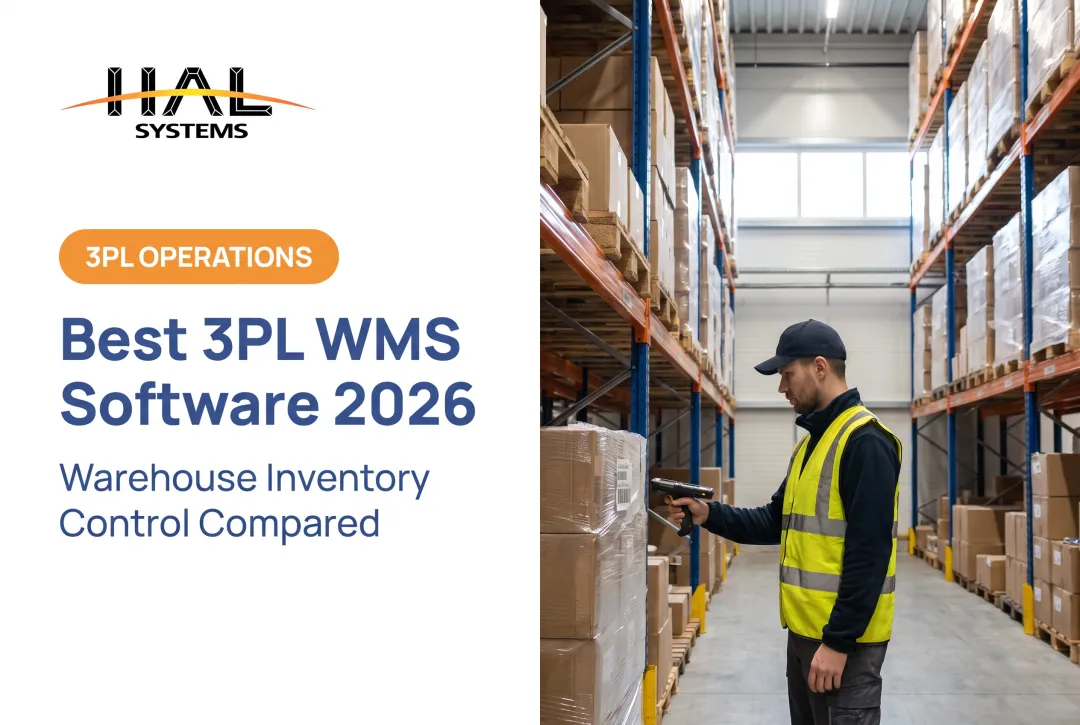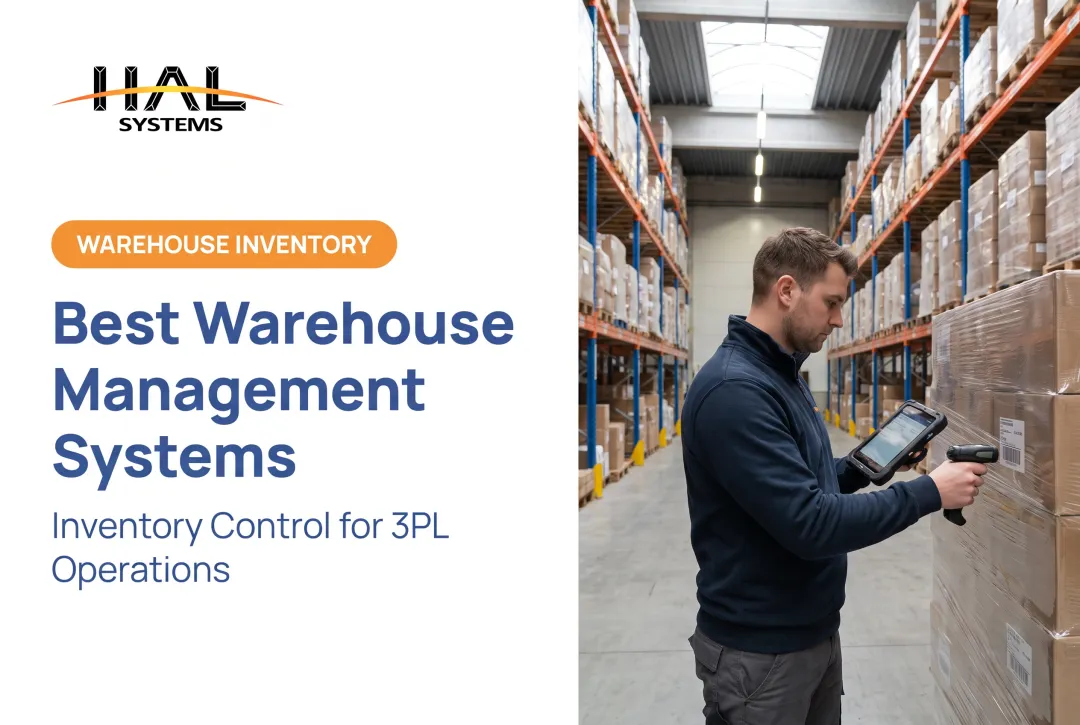

Inventory counts that don't match what's on the shelf. Pickers walking back and forth because put-away was never tracked. Fulfillment that slows to a crawl every time order volume spikes. These are the reasons US warehouses are evaluating warehouse management system (WMS) software heading into 2026 — not because a vendor convinced them to, but because paper-based processes and disconnected systems have stopped working.
There's no single "best" WMS. The right answer depends on your warehouse type, operational complexity, industry rules, integration needs, and growth plans — not which vendor has the biggest marketing budget.
This guide covers five systems worth evaluating, the criteria that actually matter, and how configurable SMB software differs from 3PL platforms and enterprise suites. Pricing, features, and vendor claims change fast, so verify everything against current vendor documentation before you buy.
Key Takeaways
- A WMS unifies receiving, put-away, picking, packing, shipping, counting, and reporting in one system.
- HAL Traxx adds configurable warehouse, inventory, asset, and manufacturing tools without a forced jump to enterprise software.
- Weigh barcode/mobile tools, integrations, deployment, configurability, support, scalability, and total cost of ownership.
- The best fit differs for distributors, manufacturers, 3PLs, eCommerce sellers, and public-sector teams.
Overview of Warehouse Management Systems in the US Market
A warehouse management system tracks inventory and labor from the moment goods arrive until they leave the building. It connects receiving, put-away, storage, replenishment, picking, packing, shipping, cycle counting, and reporting into one data trail instead of six disconnected processes.

Most US buyers end up choosing from four general categories:
- Standalone WMS: purpose-built for warehouse execution, often bolted onto other business systems
- Inventory or business-management software with WMS features built in: common for small and mid-size product businesses
- ERP-integrated WMS: warehouse functionality tied directly to a company's broader ERP system
- Advanced supply-chain execution platforms: built for complex, high-volume, multi-site operations
Where the Market Is Heading
Investment interest in WMS remains real but uneven. In the 2026 Outlook Survey, 59% of companies that are proceeding with technology investments report spending on WMS, a figure that reflects the investing subgroup, not universal adoption across every warehouse.
The same survey found 16% of respondents already use AMRs or AGVs, with another 27% planning to evaluate them within one to two years. Automation and real-time inventory visibility are becoming standard expectations rather than optional extras, though no single survey guarantees what results a specific warehouse will see.
Organizations most likely to benefit from a WMS include:
- Distributors running one or more stocking locations
- Discrete manufacturers tracking materials and work-in-process
- Third-party logistics (3PL) providers managing multiple clients
- eCommerce businesses juggling multiple sales channels
- Field-service and construction firms tracking tools and equipment
- Public-sector and institutional teams auditing fixed assets
The five systems below represent different operational profiles, not a single ranked ladder. A configurable platform built for a mid-size distributor isn't competing with an SAP deployment built for a global manufacturer; they solve different problems.
Top Warehouse Management Systems in 2026
Each system was compared on operational fit, core warehouse functionality, mobile and barcode support, integration capability, deployment flexibility, configurability, scalability, implementation resources, support, and pricing transparency as of this writing.
HAL Traxx by HAL Systems
HAL Systems has built configurable business software since 1983, and HAL Traxx is its current flagship platform. Rather than shipping one fixed product, HAL Traxx is built from modular software blocks that combine to deliver exactly what an operation needs: warehouse management, inventory control, asset tracking, work-in-process manufacturing, or a mix of all four.
That structure matters for a specific group of buyers: small and mid-size distributors, discrete manufacturers, field-service organizations, public-sector asset teams, and 3PLs that need tailored workflows without paying for (or learning) a sprawling enterprise suite.
HAL Traxx's Inventory Control – Warehousing application automates receipts, orders, deliveries, cubing and weight calculations, lot control, ownership rules, shipping documents, and delivery confirmation. A separate 3PL application handles the varying rules different customers require under one roof.
Comparison snapshot:
- Deployment: On-premises installation or Amazon Web Services cloud hosting, confirmed company offerings
- Mobile/barcode: Browser-based access with barcode, RFID, lookup, and manual-entry input methods
- Inventory and asset capabilities: Combined warehouse, asset-tracking, manufacturing, and track-and-trace functionality in one configurable platform
- Multi-location support: Supports multi-facility and multi-location operations
- Integrations: ERP, eCommerce, shipping, and accounting system connections through API, ODBC, or transfer files
- Implementation/support: Delivered through trained local resellers plus 24/7 technical support from the development team
- Pricing approach: Upfront license with annual support and maintenance, or annual SaaS billing with support included
- Ideal customer: Mid-size operations needing configurability without enterprise-level cost or complexity
Buyers should confirm current module pricing and feature specifics directly with HAL Systems, since configurable platforms are quoted around the workflows selected.
Cin7 Core or Cin7 Omni
Cin7 actually offers two distinct products, and picking the wrong one causes real headaches later. According to Cin7's own comparison, Core is positioned as turnkey inventory management covering purchasing, sales, warehouse management, and light manufacturing. Omni is built for more configurable, complex workflows across multiple channels and scaling businesses.
If you're a small or mid-size product business that wants warehouse functionality without heavy customization, Core tends to fit. If you're running omnichannel sales across multiple brands and locations, Omni's broader configurability is the better starting point.
Comparison snapshot:
- Deployment: Both products are cloud-based
- Core features: Receiving-to-shipping workflows, directed and zone picking, real-time inventory lifecycle visibility
- Omni features: Real-time stock visibility across online, retail, and wholesale channels; order-fulfillment automation across multiple brands and locations
- Integrations: Core connects to Amazon, Shopify, eBay, Magento, WooCommerce, QuickBooks, and Xero; Omni offers over 700 integrations and an open API, with 3PL Connect available as an add-on
- Pricing structure: Monthly, with pricing tied to plan and business size (confirm current tiers directly with Cin7)
- Limitations: Core is less customizable than Omni; Omni's 3PL workflow support requires the separate 3PL Connect add-on, not something to assume is bundled in
Extensiv 3PL Warehouse Manager
Extensiv is built around one specific problem: operating a warehouse on behalf of multiple clients at once, each with different inventory rules, billing terms, and visibility needs. That's a different job than managing one company's own stock.
The platform assigns customer users to specific customer organizations and warehouses, keeping each client's inventory and access properly separated. Its SmartScan mobile app handles barcode parsing, receiving, inventory movement, counts, and directed put-away from a browser-based Android or iOS device.
Billing settings can automate invoice generation and push invoices to QuickBooks when transactions close, which matters a lot for operators billing multiple clients differently.
Comparison snapshot:
- Deployment: Browser-accessed, cloud-based software requiring reliable internet
- 3PL/multi-client functionality: Customer-specific facility assignment, role-based access, and client-separated inventory records
- Integrations: QuickBooks Online connectivity and EDI ASN/Receipt Advice processing
- Mobile/barcode: SmartScan app for receiving, counts, lookups, and put-away
- Implementation: Guided by an Implementation Manager covering warehouses, locations, customers, and customer items
- Pricing: Quote-based; no published starting price
- Limitations: Built specifically around 3PL customer organizations, not a fit for manufacturing execution or public-sector asset management
Oracle Warehouse Management
Oracle WMS targets organizations running sophisticated, high-volume operations already connected to (or planning to connect to) Oracle's broader supply-chain, finance, and manufacturing stack. This isn't a system you set up over a weekend.
Receiving functionality supports cross-docking inventory directly to outbound orders, and put-away rules can direct workers to preferred locations automatically. Task and wave management prioritize picking and replenishment work, and the system integrates with external automation — pick-to-light, sortation, AS/RS, and robotic systems — through documented APIs and event mapping. Its companion Workforce Management module tracks productivity goals and activity time for labor reporting.
Comparison snapshot:
- Deployment: Cloud-based (Oracle Warehouse Management Cloud); no current on-premises edition confirmed
- Implementation complexity: High, with automation integration requiring API and event-mapping work
- Scalability: Supports multiple companies and facilities, though no specific throughput ceiling is published
- Security: Role and permission-group controls with SAML2/OAuth2 authentication options
- Pricing: Quote-based scope pricing, no published numbers
- Best fit: Large, multi-facility operations already invested in or planning an Oracle ecosystem
SAP Extended Warehouse Management
SAP EWM serves a similar role for organizations running or planning to run SAP business systems — particularly large manufacturers, distributors, and global supply chains that need precise control over warehouse execution.
EWM handles goods receipts, goods issues, stock transfers, and automatic replenishment, with integration into SAP's Inventory Management and Delivery Processing modules. It supports automatic wave-pick creation and rule-based bundling of warehouse tasks, along with slotting that optimizes product-to-bin placement based on size and access frequency. Labor management distributes work through resource queues, with manual or automatic warehouse-order assignment.
Comparison snapshot:
- Deployment: Embedded within SAP S/4HANA, or decentralized and integrated with a remote SAP system
- SAP prerequisites: Requires an S/4HANA foundation; this isn't a standalone purchase
- Automation support: Interfaces to external warehouse-control units, including automated put-away and forklift-control systems
- Scalability: Built for bin-level warehouse mapping across automatic, high-rack, bulk, and fixed-bin storage types
- Pricing: Quote-based, tied to SAP licensing and scope
- When it's excessive: A warehouse that only needs basic receiving and picking likely doesn't need SAP's wave logic, slotting engine, and resource queues; that's a complexity mismatch, not a product flaw

How We Chose the Best Warehouse Management Systems
This ranking is based on documented product capability and operational fit, not brand size or affiliate relationships. Vendor features and pricing shift throughout 2026, so treat every claim here as a starting point for your own verification, not a final word.
Core warehouse workflows evaluated:
- Receiving, put-away, and location control
- Replenishment, picking, packing, and shipping
- Returns processing and cycle counting
- Lot and serial tracking with audit trails
- Real-time inventory updates
Technology and integration readiness:
- Barcode, mobile, and RFID scanning where relevant
- APIs and data-exchange options
- ERP, accounting, eCommerce, and shipping integrations
- Reporting, dashboards, user permissions, and data ownership
Operational fit varies by segment. A platform built around multi-client billing (Extensiv) isn't a natural fit for a discrete manufacturer tracking WIP.
An enterprise suite requiring SAP or Oracle infrastructure (SAP EWM, Oracle WMS) can be overkill for a single-site distributor. Configurable platforms like HAL Traxx and Cin7 fill the space between basic inventory spreadsheets and full enterprise suites.
Deployment and ownership factors we weighed:
- Cloud versus on-premises installation
- Implementation effort, migration, and training needs
- Reseller or partner support availability
- Ongoing technical support and upgrade paths
- User, location, and customization fees
- Total cost of ownership, not just sticker price
Common Selection Mistakes to Avoid
- Buying on feature count alone: more features don't matter if your team never uses them
- Ignoring warehouse-worker usability: a system your pickers resist will fail no matter how capable it is
- Underestimating data cleanup and implementation: bad data in means bad reports out
- Skipping integration testing: confirm your ERP, accounting, and shipping connections actually work before go-live
- Overlooking future growth: a system that fits today's volume may not fit next year's
- Treating basic inventory software as a complete WMS: without directed workflows and barcode control, it often isn't one

Conclusion
There's no universal "best" warehouse management system : only the one that matches your warehouse processes, industry obligations, integration environment, workforce, and budget. A 3PL managing five clients has different needs than a manufacturer tracking work-in-process or a municipality auditing fixed assets every year.
Before committing to anything, build a requirements checklist. Test realistic workflows using your own sample inventory data, not a vendor's demo set. Request transparent implementation and ownership estimates , not just subscription pricing. Compare measurable outcomes: inventory accuracy, order accuracy, fulfillment speed, labor efficiency, and reporting visibility.
If your organization needs configurable warehouse, inventory, asset, or manufacturing workflows without committing to a large enterprise platform, HAL Systems is worth a conversation. HAL Traxx can be configured around your existing processes, deployed on-premises or via AWS cloud hosting, and supported by a team that's been building this kind of software since 1983. Contact HAL Systems to discuss deployment preferences, integrations, and implementation support for your specific operation (no guarantees, just an honest look at fit).
Frequently Asked Questions
How to be the best warehouse manager?
Focus on clear standard operating procedures, accurate inventory data, and consistent staff training. Monitor KPIs like order accuracy and fulfillment speed, prioritize safety, and use your WMS technology to drive continuous process improvement rather than just record-keeping.
What is the 80/20 rule in inventory?
It's a Pareto-based prioritization principle: a relatively small group of high-value or high-impact items often deserves disproportionate attention. ABC classification applies this idea, but the actual item groupings should reflect your organization's own demand, margin, and risk data rather than a fixed universal split.
What are the 7 principles of warehousing?
The Council of Supply Chain Management Professionals frames Seven Rights of Fulfillment: right product, process, carrier, tracking, on-time delivery, condition, and billing. Sources vary, so treat this as a common framework rather than a fixed standard.
What is a warehouse management system?
A WMS is software that manages warehouse activities from receiving through shipping — including put-away, inventory tracking, picking, packing, and cycle counting. It improves visibility, traceability, and process control compared to manual or paper-based tracking.
What features should the best warehouse management system include?
Look for receiving, put-away, and location control; barcode or mobile scanning; picking, packing, and shipping workflows; cycle counting and reporting; integrations with ERP or accounting systems; user permissions; and lot or serial traceability where your industry requires it.
How much does a warehouse management system cost?
Costs depend on deployment model, users, locations, order volume, modules, integrations, customization, and training. Request a current vendor quote rather than relying on published ranges, since most mid-market and enterprise systems are scoped individually.