
A physical inventory management system closes that gap. It pairs physical counting procedures with barcode or RFID capture, inventory software, location data, and reconciliation workflows that document exactly what was found and why records needed to change.
This article covers how these systems work, which businesses benefit most, which capabilities actually matter, and how to roll one out without shutting down operations for a week.
Key Takeaways
- Physical inventory verifies real stock; perpetual records track it continuously, and both work together.
- Barcode and mobile scanning cut manual entry and sharpen location accuracy.
- Cycle counting spreads verification across the year instead of one disruptive annual shutdown.
- Audit trails and role-based approvals turn a simple count into a defensible record.
- Match the system to your inventory types, locations, volume, and growth plans, not a generic template.
What Is a Physical Inventory Management System?
A physical inventory management system includes more than the count itself: the people doing the counting, the scanners and labels they use, the software recording results, the policies governing exceptions, and the records proving what happened.
This matters because businesses track wildly different things under "inventory":
- Finished goods ready to ship
- Raw materials and components waiting on the production floor
- Work-in-process moving through manufacturing steps
- MRO supplies, tools, and equipment
- Serialized assets requiring individual tracking
- Client-owned or consigned stock held on someone else's behalf
HAL Traxx, for example, tracks consigned inventory at customer sites and enforces lot and date control, which matters when raw materials and finished goods need separate ownership records.
Physical, Perpetual, and Cycle Counting Aren't the Same Thing
These three terms get used interchangeably, but they describe different activities:
- Physical inventory – a full or targeted verification of items actually present, right now, in a specific place
- Perpetual inventory – records that update automatically as goods are received, moved, consumed, produced, shipped, returned, or checked out
- Cycle counting – recurring counts of selected items, locations, or categories, spread across the year instead of saved for one annual event
Perpetual records don't eliminate the need for physical counts. Tax guidance such as IRS Publication 538 permits businesses to use book or perpetual inventory methods. It still requires a physical inventory at reasonable intervals, with book records adjusted to match what's actually there.
Manual, Barcode, and Mobile Capture
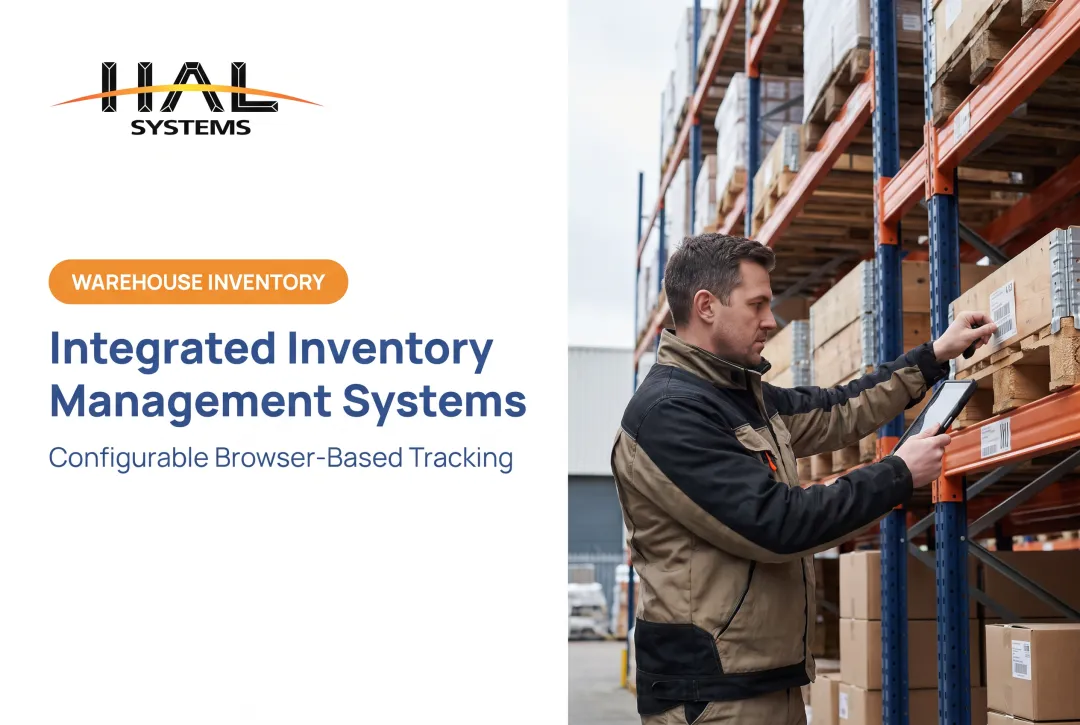
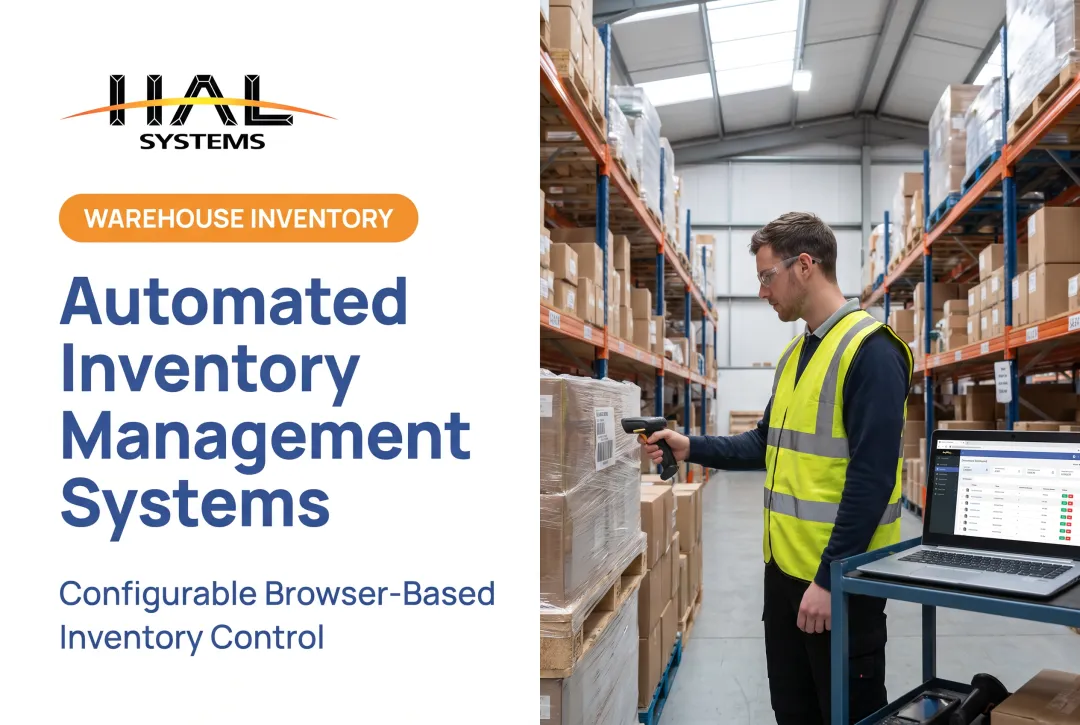
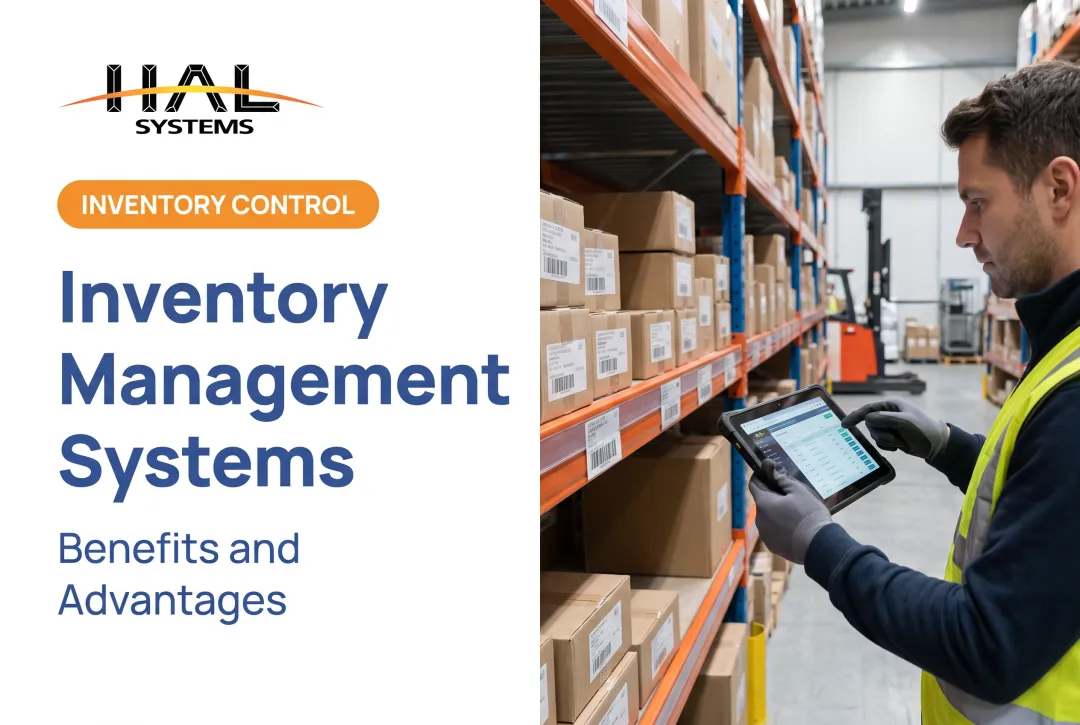
Manual counts on clipboards still work for small operations, but they introduce transcription errors and take longer to reconcile. Barcode and mobile capture identify items faster and verify location at the same time quantity is recorded. HAL Traxx supports that approach by accepting barcode, RFID, lookup, or manual entry individually or in combination.
None of this works without clean foundational data:
- Accurate item masters
- Consistent SKU or part numbers
- Correct units of measure
- Legible barcode labels
- Defined location codes
- Ownership fields for consigned or client stock
Skip this step and even the best scanner produces unreliable results.
A system is only as good as the record it leaves behind. That record should show what was counted, when, where it was found, who performed the count, what variance turned up, and who approved the resulting adjustment.
How Does a Physical Inventory Management System Work?
The workflow runs from preparation through reconciliation, and skipping steps is usually where counts go wrong.
- Scope and prepare. Decide between a full count or cycle count, set cutoff rules for transactions, map locations, clean up storage areas, flag excluded stock, and assign count teams.
- Capture at the point of count. Scanners or mobile devices read barcodes or RFID tags to record item identity, quantity, location, lot, serial number, and ownership, all at once, not in separate steps.
- Control for bias. Blind counting and controlled count sheets prevent the "expected" quantity from influencing what someone writes down, which matters for organizations with strict internal controls.
- Handle movement during the count. Receiving, picking, shipping, production consumption, transfers, returns, and asset check-in/check-out continue during a count. A transaction freeze or defined cutoff keeps those movements from corrupting results.
- Reconcile variances. Compare physical results against system records, flag discrepancies, recount or investigate exceptions, document causes such as misplacement or damage, get sign-off, and post the approved adjustment.
- Preserve the audit trail. Role-based permissions, timestamps, exception notes, and links back to purchase orders, work orders, sales orders, transfers, or asset transactions turn a count into something an auditor can actually follow.

Capture method affects how step two plays out. GS1's RFID guideline notes that RFID can read palletized cartons without removing them from the pallet, since it doesn't require line of sight.
Barcode workflows typically require depalletizing and scanning each carton individually. That's a workflow difference worth planning around, not a universal accuracy claim.
Reporting closes the loop. Count results that surface high-variance locations, recurring process failures, obsolete stock, weak labeling, or training gaps feed directly into Lean and Six Sigma improvement work. Process consulting often follows the first full count cycle to act on those findings.
A quick contrast:
- A distributor counts warehouse bins, reconciling receiving and picking activity against on-hand quantities.
- A manufacturer verifies raw materials and WIP, often using scan-to-batch tracking that ties specific material lots to finished-goods batches.
- A field service company checks tools and equipment assigned to vehicles and crews, using check-in/check-out records that capture condition, location, and time checked out.
What Are the Benefits and Use Cases?
Accurate physical inventory data changes decisions across the business, not just the warehouse. It shapes available-to-promise quantities, purchasing timing, production planning, order fulfillment accuracy, asset accountability, and the inventory figures that show up on financial statements.
Reduced manual error. Barcode-driven workflows cut duplicate data entry and the transcription mistakes that come with it. They also remove ambiguity about which item or location a count actually refers to.
HAL Systems' own implementation data shows that labor required to complete inventory transactions typically drops by 25% to 65% once barcode capture replaces manual logging. That shift matters for operations running thin on warehouse staff.
Industry-wide accuracy numbers back up why this matters. ISM's 2024 report on CAPS Research data puts average inventory accuracy at 91%, with the lowest-performing companies trailing at just 67%. That's a wide gap, and it's largely a process gap.

Less disruptive counting. Cycle counting spreads verification across the year instead of shutting down operations for one wall-to-wall count. It also lets you prioritize high-value, fast-moving, or historically inaccurate items more often than everything else.
Multi-location visibility. Distributors, 3PLs, manufacturers, and public-sector teams often need to separate stock by warehouse, room, vehicle, job site, department, customer, or legal ownership.
HAL Traxx's support for 3PL operations and consigned inventory by owner fits that need. A contract warehouse holding goods for five different clients needs those records kept separate, not blended together.
Traceability for regulated or high-stakes inventory. Lot-controlled, serial-controlled, and warranty-sensitive items need preserved movement and custody history.
HAL Traxx's healthcare applications, for example, are built to meet medical-device UDI requirements and track lot codes and expiration dates for pharmacy inventory. That traceability matters when a recall notice shows up.
What discrepancies actually cost:
- Stockouts and emergency purchasing
- Over-ordering and excess carrying cost
- Write-offs for stock that was never really there
- Production delays from missing materials
- Misplaced assets that were simply never logged
- Inaccurate cost records feeding into financial reporting
These effects hit distributors, manufacturers, field service teams, and institutional fixed-asset groups differently, but the root cause is the same: records that don't match reality.
Choosing and Implementing a Physical Inventory Management System
Not every platform handles every workflow. Before committing, check for:
- Barcode and mobile support, including offline or warehouse-floor usability
- Cycle counting alongside full physical counts
- Location, lot, and serial-level control
- Asset check-in/check-out tracking
- Approval workflows and full audit history
- Configurable reporting and role-based user permissions
Integration and Deployment
A system that can't talk to your ERP, accounting software, manufacturing systems, or shipping carriers creates more manual work than it saves. HAL Traxx, for instance, connects through APIs, ODBC, or transfer files, depending on what's on the other end.
Deployment is its own decision:
| Factor | Cloud | On-Premises |
|---|---|---|
| IT ownership | Vendor hosts and maintains | Internal IT maintains |
| Connectivity | Requires live connection | Runs on local network |
| Upfront cost | Lower, SaaS billing | Higher, upfront license |
| Data control | Shared responsibility model | Full internal control |
HAL Systems offers both: on-premises installation or cloud hosting on Amazon Web Services, with the same HAL Traxx functionality either way.
A Practical Rollout Sequence
- Document current workflows before changing anything
- Establish master data standards for item numbers, units of measure, and location codes
- Label and map every storage location
- Clean up starting records; don't digitize bad data
- Configure permissions and exception handling
- Pilot in one warehouse or product line
- Train users on the actual equipment they'll use
- Validate results, then expand in stages

Total cost adds up beyond the software license:
- Scanners, printers, and labels
- Implementation and integration work
- Training, ongoing support, connectivity, and maintenance
- Operational disruption during rollout
Configurable platforms built from software blocks that can be combined and expanded over time, like HAL Traxx, are designed to avoid a full platform upgrade later. Not every operation needs every module from day one.
Track success against a short set of measures:
- Count completion time
- Discrepancy resolution time
- Adjustment volume
- Repeat variance by location
- Stockout frequency
- Asset recovery rate
Establish your own baseline first. Industry benchmarks vary too much by sector to copy a number from someone else's operation.
Conclusion
A physical inventory management system exists to do one job well: create a controlled, documented connection between what your organization physically holds and what its business systems report. That connection breaks down quietly, a mislabeled bin here, an unrecorded transfer there, until a count reveals how far apart the two have drifted.
Closing that gap takes discipline more than complexity:
- Schedule physical verification appropriately
- Keep item and location data clean
- Capture counts with barcode or RFID instead of clipboards
- Reconcile variances through a clear approval process
- Feed what you learn back into process improvement
If your organization is weighing whether a configurable platform fits your inventory, warehouse, manufacturing, or asset-tracking workflows, HAL Traxx is worth a look, particularly if your operation doesn't fit neatly into an off-the-shelf template. A conversation with HAL Systems can help you figure out whether it's a fit for how you actually operate.
Frequently Asked Questions
What is a physical inventory management system?
A physical inventory management system combines the processes, technology, equipment, and controls used to count, track, reconcile, and audit stock. It includes people, labels, software, and approval workflows, not only the annual count itself.
What is the difference between physical inventory and perpetual inventory?
Physical inventory verifies what's actually present in the real world. Perpetual inventory updates digital records continuously as transactions occur. Most businesses need both: perpetual records for daily operations, physical counts to catch what those records miss.
How does barcode scanning improve physical inventory counts?
It speeds up item identification, cuts manual-entry steps, and verifies location at the same time quantity is recorded. It also leaves a cleaner movement and audit history than handwritten count sheets.
How often should a business perform a physical inventory count?
It depends on inventory value, transaction volume, regulatory requirements, and discrepancy history. Many businesses combine periodic full counts with ongoing cycle counting rather than relying on one annual event.
Can physical inventory software support multiple warehouses or locations?
Yes, when the system is built for it. Look for location-level quantities, transfer tracking, separate ownership or customer records, and consolidated reporting across sites.
What should businesses look for when choosing a system?
Look for barcode or mobile support, cycle counting, item and location control, system integrations, audit trails, configurable reporting, and flexible deployment. Factor in total cost of ownership, not only the software license.