
Introduction
Ask a warehouse manager where a specific pallet jack is right now, and you'll usually get a shrug. Ask who last checked out the surveyor's laser level, and the answer is often "someone, sometime last month." This lack of visibility costs real money: wasted labor hunting for tools, duplicate purchases, and audits that drag on for days.
RFID (radio-frequency identification) addresses this gap by automating how assets get identified and recorded. This guide covers what RFID actually does in asset management, how the technology captures events, where it delivers measurable value, and how to plan a deployment that works in your facility.
One clarification upfront: RFID identifies tagged assets and can confirm they passed through a zone. It's not the same as GPS-style continuous tracking. Understanding that distinction early prevents a lot of disappointment later.
Key Takeaways
- RFID asset management links tagged items, readers, antennas, and software into one automated record-keeping workflow
- Tag type and reader placement must match your asset's material, environment, and required read distance
- Clean asset data and a tested pilot matter more than hardware specs alone
- Pair RFID with barcode scanning rather than treating it as a full replacement
What Is RFID in Asset Management?
RFID uses radio waves to transmit a unique identifier stored on a tag to a nearby reader, without requiring direct line of sight. That's the core technology. But owning tags and a reader doesn't make you an "RFID asset management system."
A real system connects each tag read to an asset record that includes location or zone, current status, assigned custodian, and transaction history. Without that software layer, you just have a reader that beeps.
Which Assets Make Sense to Tag
Not every item benefits equally from RFID. Categories where it tends to pay off include:
- Tools and equipment shared across crews or departments
- IT hardware like laptops, tablets, and networking gear
- Returnable containers and reusable totes in a supply loop
- Warehouse stock and manufacturing work-in-process
- Field-service assets assigned to trucks or job sites
- Fixed assets in schools, hospitals, and government buildings
What RFID Does and Doesn't Fix
RFID automates detection and cuts down manual scanning labor. It does not fix bad data on its own. If your asset list has duplicate entries, missing descriptions, or outdated custodians, tagging those assets just means you're now automating confusion faster.
Physical setup matters too. Tag placement, reader coverage, and surrounding materials (metal shelving, liquid-filled containers) all affect whether reads are reliable. Plan for that before you order a single tag.
How RFID Works in Asset Management
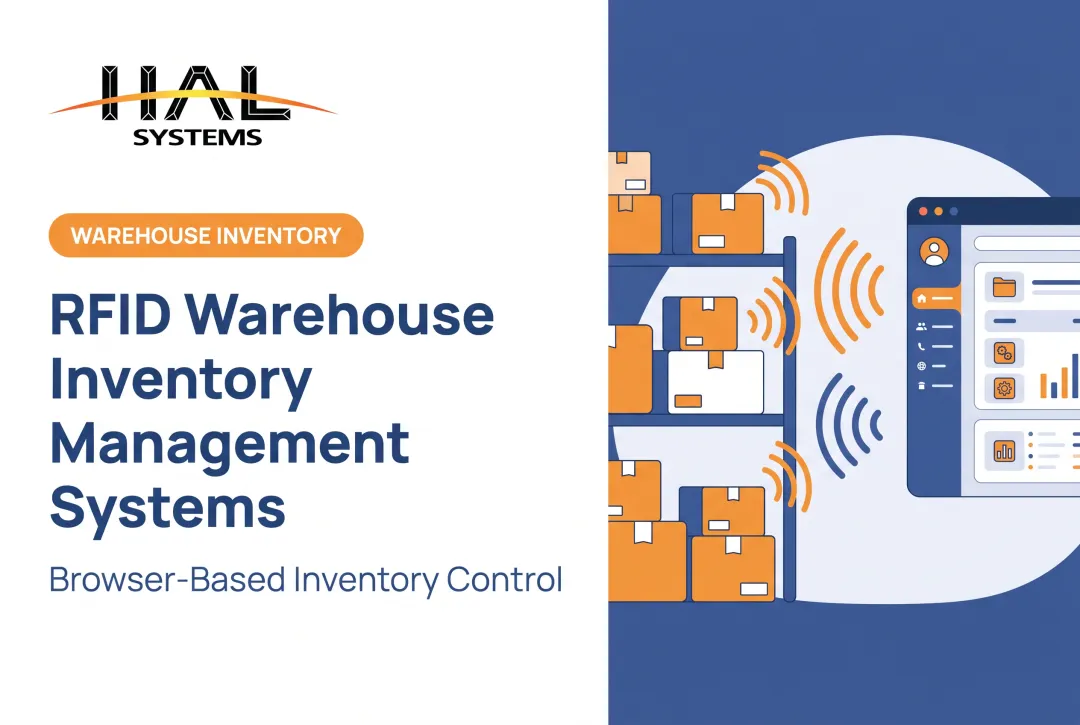
Here's the basic sequence: a reader emits a radio signal, a tag in range responds with its stored identifier, the reader passes that event to middleware or application software, and the software updates the asset's record.

According to GS1 US's overview, the core components are the tag, antenna, reader, and host system. The reader's job is to capture tag data and forward it for storage and evaluation.
The Components That Do the Work
- Tags - passive (no battery, reflects the reader's signal), active (battery-powered with its own transmitter), or semi-passive (battery-assisted but still relies on backscatter)
- Readers and antennas - handheld units for audits and mobile work; fixed units mounted at doors, dock doors, or production cells for continuous zone coverage
- Middleware or application software - filters duplicate reads, timestamps events, and routes data into asset, inventory, or manufacturing systems
- Network and power infrastructure - the plumbing that gets reader data where it needs to go reliably
From Read Event to Business Record
A tag read is not automatically a confirmed transaction. If a reader near a storage area picks up a tag, that might mean the asset moved there, or it might just mean the tag passed within range. Workflow rules, staff confirmation steps, or multiple reader zones working together typically need to agree before software changes ownership or status.
Typical workflows include:
- Receiving an asset
- Moving it between zones
- Checking it out to an employee or crew
- Sending it out for maintenance
- Retiring it
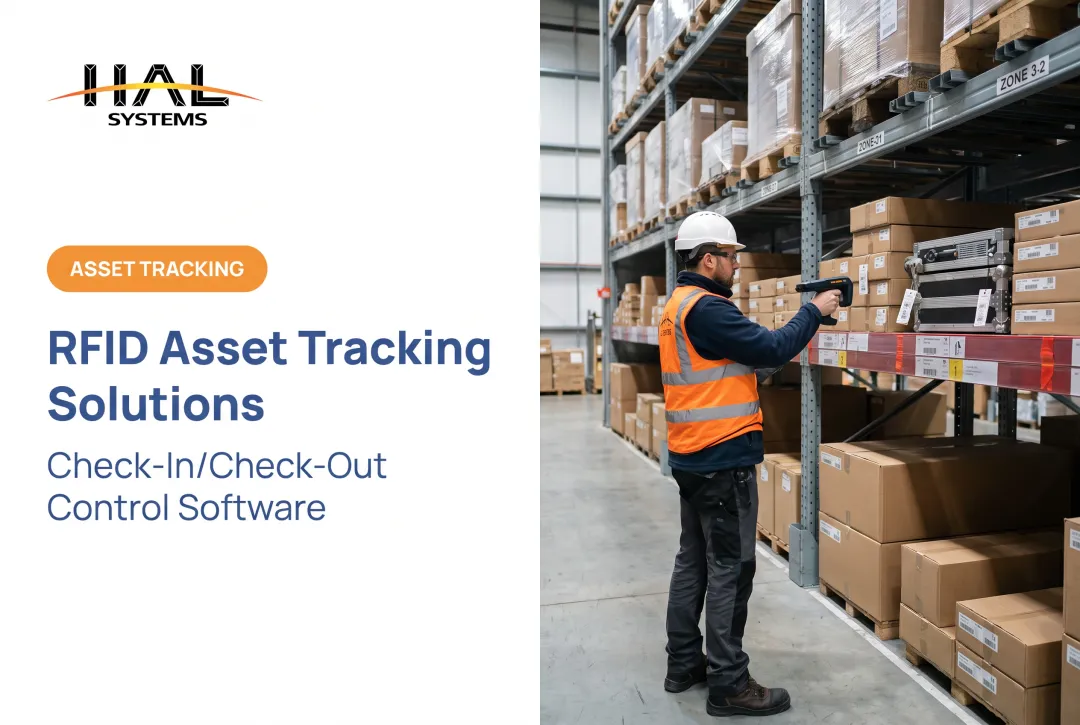
HAL Traxx's Check In/Check Out application, for example, records current location, time checked out, and condition at both ends of a transaction. It can block checkout entirely if an asset's calibration or repair status doesn't clear.
Cross-wall or adjacent-zone reads still happen. A reader can occasionally pick up a tag through a wall from a neighboring room, which is why exception handling and reconciliation logic matter as much as the hardware itself.
Business Benefits and Practical RFID Use Cases
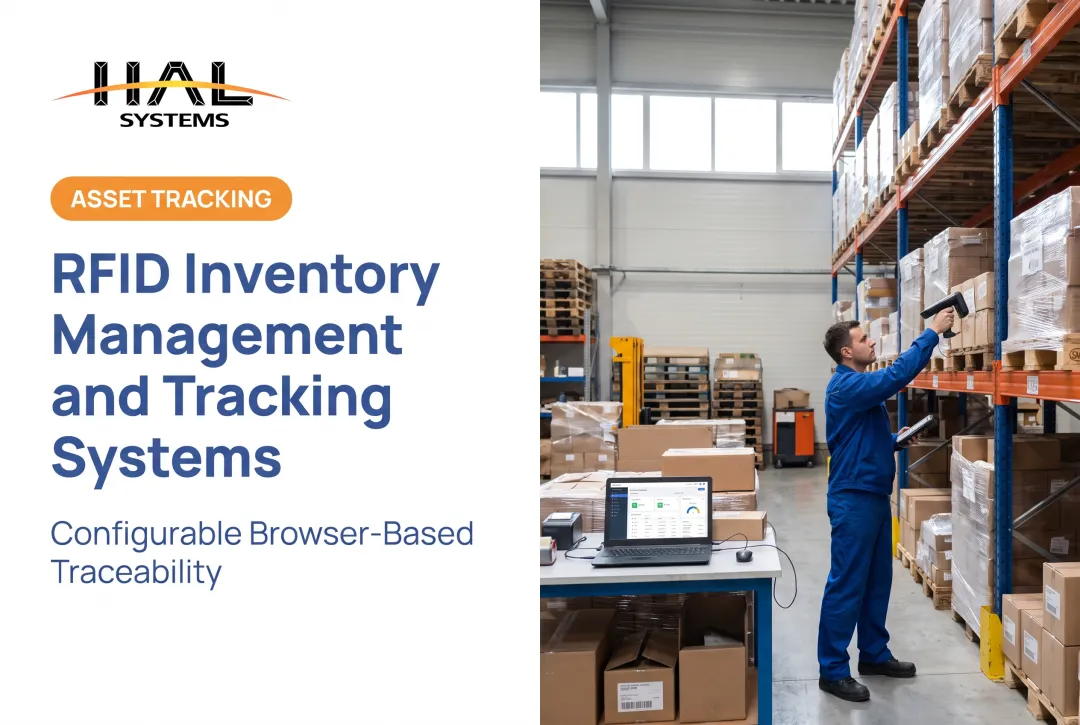
The headline benefit is simple: fewer people spending fewer hours counting and searching for things. Multiple tagged assets can be identified in a single pass instead of scanning labels one at a time.
Based on HAL Systems' internal project data, direct labor required for inventory transactions is typically reduced by 25% to 65% once barcode or RFID automation replaces manual logging.
Real-world case evidence backs up similar gains elsewhere. Harvard Medical School's audit program cut equipment-counting time by 75% after tagging roughly 4,300 lab and server assets with passive UHF tags, down from a process that previously took about two hours to count just 50 items.

Where Timestamped History Pays Off
A time-stamped record of who checked an asset out, where it moved, and when it returned supports more than convenience. It feeds:
- Accountability when equipment goes missing
- Maintenance scheduling tied to actual usage
- Compliance documentation for audits
- Investigation trails for unauthorized movement
Operational Visibility by Environment
RFID shows up differently depending on the setting:
- Warehouses and distributors - receiving, putaway, cycle counts, returnable container tracking, shipment verification
- Manufacturers - raw-material movement, work-in-process visibility, tool control at each production stage
- Field service and construction - assigning tools to crews, trucks, or job sites with check-in/check-out events
- Institutions (schools, hospitals, government) - annual fixed-asset inventories, equipment location, custody records
Building the Business Case
The strongest justification usually traces back to one of these bottlenecks:
- Repeated manual audits eating staff time
- Frequent asset loss
- Costly equipment sitting idle
- No visibility between locations
Weigh implementation and recurring costs against avoided replacement costs, labor hours saved, faster audits, fewer discrepancies, and any compliance improvements.
HAL Systems' professional services team routinely builds this kind of ROI model alongside customer personnel before a project gets greenlit, which tends to surface gaps that generic cost estimates miss.
How to Plan and Implement RFID
Skipping straight to hardware selection is the most common mistake. Start with the operational problem instead.
- Document your baseline - map the current process, identify which assets or transactions create the most cost or risk, and define what success looks like
- Audit assets and environment - note material, size, surfaces, mobility, quantities, and exposure to metal, liquid, heat, or rough handling
- Map read zones - identify doors, docks, storage areas, production cells, and vehicles where a read event should change an asset's record
- Pilot before you scale - test tags, readers, and antennas in your actual environment, tracking missed reads, false reads, duplicate events, and tag durability

Getting the Data Foundation Right
Tagging a messy asset list just automates the mess. Before tags go on anything:
- Clean and standardize asset IDs, descriptions, locations, and custodian fields
- Decide which events update records automatically versus requiring staff confirmation
- Plan integration with ERP, warehouse, manufacturing, or accounting systems through APIs, ODBC connections, or transfer files
A configurable platform such as HAL Traxx connects RFID or barcode events with asset tracking, inventory, warehouse, and work-in-process workflows in one system rather than several disconnected tools. Verify specific integration requirements for your environment before committing, since every ERP and shop-floor setup differs.
Rolling It Out Without Disrupting Operations
Pilot one asset category or workflow first. Train the users who'll touch it daily. Review what the pilot data actually shows, correct tag placement or reader configuration based on real results, then expand.
After launch, assign ongoing ownership of:
- Tag replacement and reader maintenance
- Software updates and data-quality checks
- Periodic KPI review
Without that ownership, performance degrades over the following year.
Choosing the Right RFID Technology and Software
Passive, Active, and Semi-Passive Tags
| Tag type | Power source | Range category | Relative cost | Maintenance |
|---|---|---|---|---|
| Passive | Reader field, no battery | Shorter to moderate, environment-dependent | Lower | None |
| Active | Onboard battery, own transmitter | Longer range | Higher | Battery servicing required |
| Semi-passive (BAP) | Battery powers circuitry only | Longer range | Higher | Battery servicing required |
Don't assume a battery alone makes a tag "active." Semi-passive tags still communicate by backscattering the reader's signal rather than broadcasting independently.
Frequency Matters More Than It Seems
Low-frequency and high-frequency tags generally suit close-proximity reads, while UHF is more commonly used for faster reads across broader zones. In the US, UHF RFID operates in the 902-928 MHz band. The FCC's conducted-power rule sets conditional limits, such as a maximum of 1 watt conducted output under specific hopping-channel configurations.
Confirm your reader and antenna setup meets current regulatory requirements before deployment, not after.
Selection Checklist
Before buying hardware, confirm:
- Tag attachment method suited to the asset surface
- Resistance to metal, liquid, or impact where relevant
- Required read distance for each zone
- Handheld versus fixed reader needs
- Number of distinct read zones required
- Security and lifecycle durability expectations
RFID, Barcodes, or Both?
RFID wins when you need non-line-of-sight reads or multiple items captured at once. Barcodes still make sense for low-volume, close-range scans or assets that are hard to tag reliably.
A hybrid approach, RFID for high-volume or high-risk workflows and barcodes for exceptions or legacy items, is common in practice. HAL Traxx accepts barcode, RFID, lookup, or manual entry in any combination, so a facility does not have to lock into one method permanently.
Evaluating Software, Not Just Hardware
Look past the tag spec sheet. Software should cover:
- Asset master data and check-in/check-out logic
- Location and custody history
- Audit tools, alerts, and mobile support
- Role-based access and integration options
Factor total cost beyond the tags themselves:
- Printers or encoders, readers, and antennas
- Mounting hardware, network, and power work
- Implementation, training, and future tag replacement
Frequently Asked Questions
What does RFID mean in business?
RFID stands for radio-frequency identification, a wireless method that reads a tag's unique identifier without physical contact. Businesses pair tags, readers, and software to identify, locate, count, or manage physical assets automatically.
What is RFID for inventory management?
RFID captures inventory events wirelessly, letting teams read multiple tagged items at once instead of scanning barcodes one by one. It supports faster cycle counts and better movement visibility, though it still depends on clean underlying data.
How does RFID improve asset management?
It automates identification, provides zone-level location visibility, and builds a custody and maintenance history automatically. Results vary based on tag selection, reader placement, and how well the software reconciles exceptions.
What is the difference between RFID and barcode tracking?
Barcodes require line-of-sight scanning one item at a time; RFID can read multiple tags without direct aim. RFID generally costs more upfront, so many operations use a hybrid approach for exceptions or low-priority items.
What do you need to implement an RFID asset management system?
You'll need tags, readers, antennas, middleware or application software, network infrastructure, and clean asset records. Just as important: defined workflows, a tested pilot, system integration, and trained staff who understand the new process.