
Introduction
Your ERP says you own 500 units of a part. Your picker is standing in aisle 12 and can't find them. That gap is where most warehouse frustration starts.
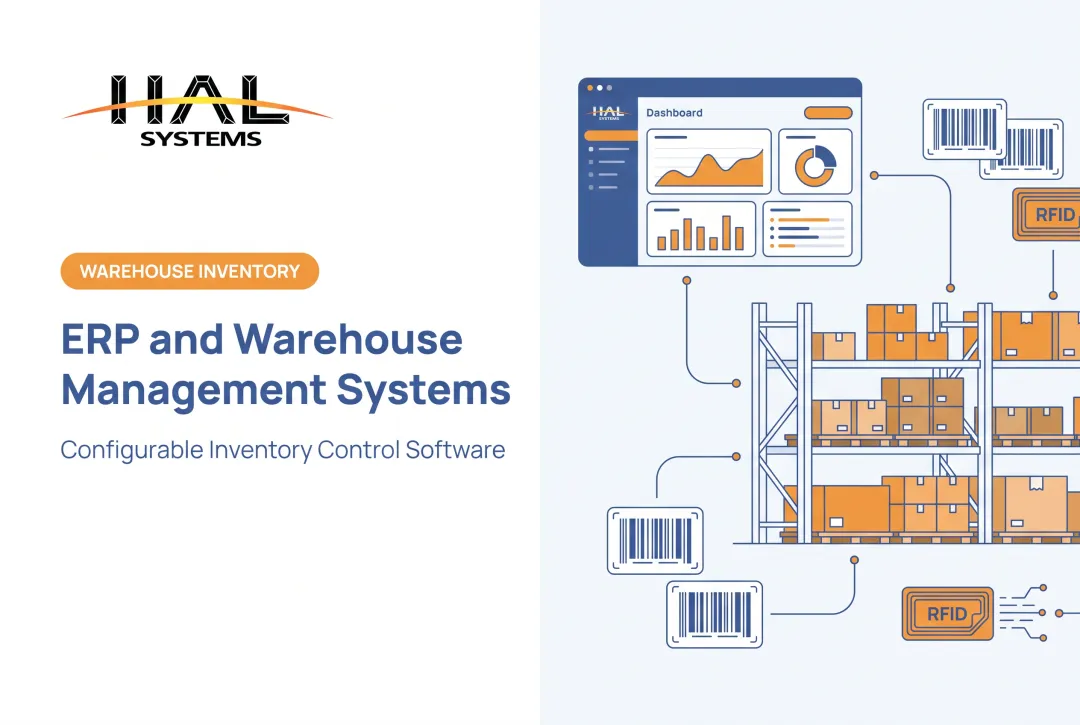
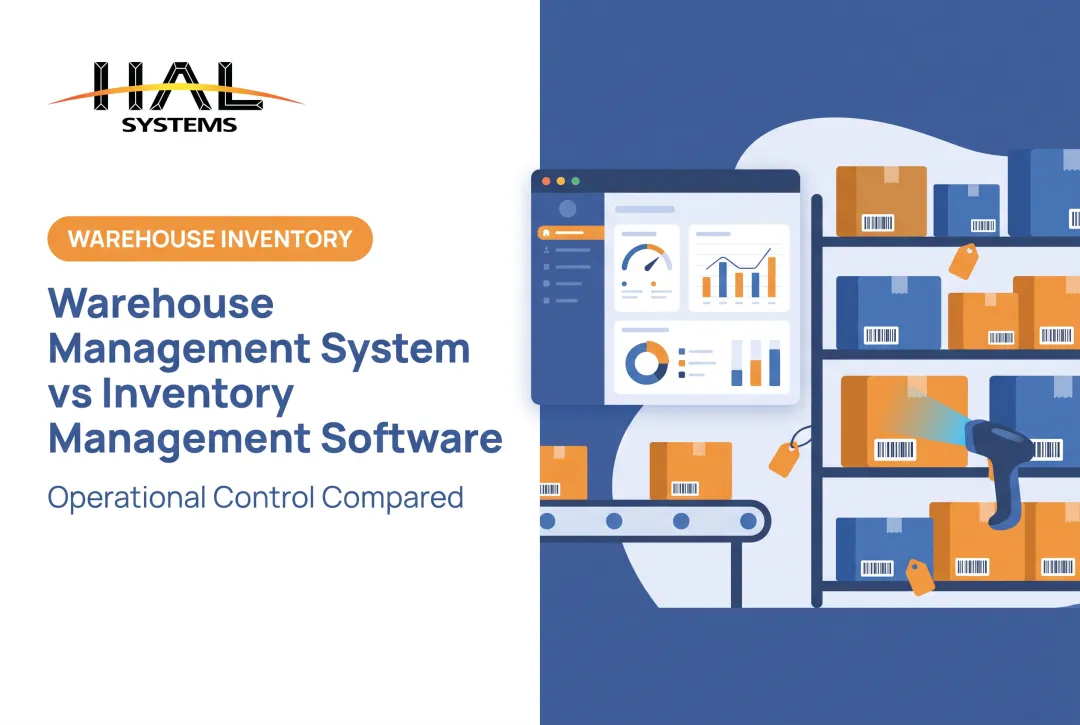
ERP shows what the business owns and owes. Warehouse teams need to know where an item sits and what to do with it next. Pick the wrong system and you get duplicate data entry, inventory discrepancies, slow fulfillment, and processes that don't scale.
The need is real. Zebra's 2023 study found that 82% of warehouse associates and 76% of decision-makers said they need better inventory-management tools to improve accuracy and determine availability.
This article explains how ERP and WMS differ, where they overlap, and how to choose.
Key Takeaways
- ERP links finance and operations across accounting, purchasing, sales, production, inventory, and reporting.
- WMS owns warehouse execution: receiving, put-away, location control, picking, packing, shipping, and cycle counting.
- Simple, low-volume warehouses often run fine on ERP inventory alone.
- Pair ERP with WMS when ERP stays the system of record and WMS runs floor-level work.
WMS vs ERP: Quick Comparison
| Area | ERP | WMS |
|---|---|---|
| Purpose | Company-wide processes, financials, planning, purchasing, sales, production | Warehouse activity from receiving through shipping and returns |
| Inventory detail | Balances, availability, valuation, demand | Bins, zones, lots, serial numbers, allocations, task status |
| Warehouse execution | Basic receiving, shipping, locations | Directed put-away, mobile scanning, cycle counts, wave picking, replenishment |
| Main users | Finance, purchasing, sales, management | Supervisors, operators, inventory and shipping staff |
| Cost and rollout | Broader implementation and process change | Faster for a warehouse-specific need, but needs integration, hardware, and training |
Compare total cost, not license price alone. Modern Materials Handling's 2026 survey ranks total cost of ownership (32%) and compatibility with existing systems (31%) as the top software adoption obstacles.

What Are ERP and WMS Software?
Enterprise Resource Planning (ERP)
ERP is an integrated suite of business applications. It manages accounting, purchasing, order management, sales, production, inventory, and reporting from one shared set of data.
For small and mid-size distributors and manufacturers, that means coordinated purchasing, inventory planning, order processing, financial reporting, and a clear view of business performance.
When ERP is a practical starting point:
- One warehouse, or a simple layout
- Moderate inventory complexity
- Few picking variations
- A strong need to tie finance, purchasing, sales, and inventory together
Warehouse Management System (WMS)
A WMS manages detailed warehouse execution: receiving, inspection, put-away, location management, replenishment, picking, packing, shipping, returns, and inventory movements.
Barcode scanning, mobile workflows, location data, task assignment, and cycle counting all tighten accuracy. Research on distribution centers models inventory record inaccuracy as a source of wasted travel time and lost sales. Cycle counting can reduce that inaccuracy, though the finding comes from modeled research rather than a field test of WMS software.
WMS fits best when you have:
- Multiple locations
- A 3PL holding separate client inventories
- Materials and work-in-process moving through a plant
- Lot, serial, expiration, or location-level traceability needs
How ERP and WMS Overlap
Both can manage inventory, orders, receiving, shipping, and reporting. They answer different questions. ERP asks what the business has, needs, and owes. WMS asks where items are and how the team should move them.
WMS vs ERP: What Is Better?
Neither wins outright. Base the decision on your operation's constraints:
- Warehouse complexity and number of locations
- SKU and order profiles
- Traceability needs and labor workflows
- Automation plans, budget, and IT capacity
- Expected growth
Choose ERP when business-wide coordination is the priority
Start with ERP if you mainly need accounting, purchasing, sales, production, and inventory planning, with basic warehouse controls. This works when volume and process variation are manageable.
Know the project risk, though. Panorama's 2026 ERP Report found a 9-month median project duration, with over a quarter of projects over budget.
Choose WMS when warehouse execution is the bottleneck
Look at dedicated WMS capabilities when you struggle with:
- Location accuracy
- Directed put-away and picking productivity
- Barcode-driven execution and replenishment
- High order variety or multi-client inventory
- Real-time warehouse visibility
Choose both when you need breadth and depth
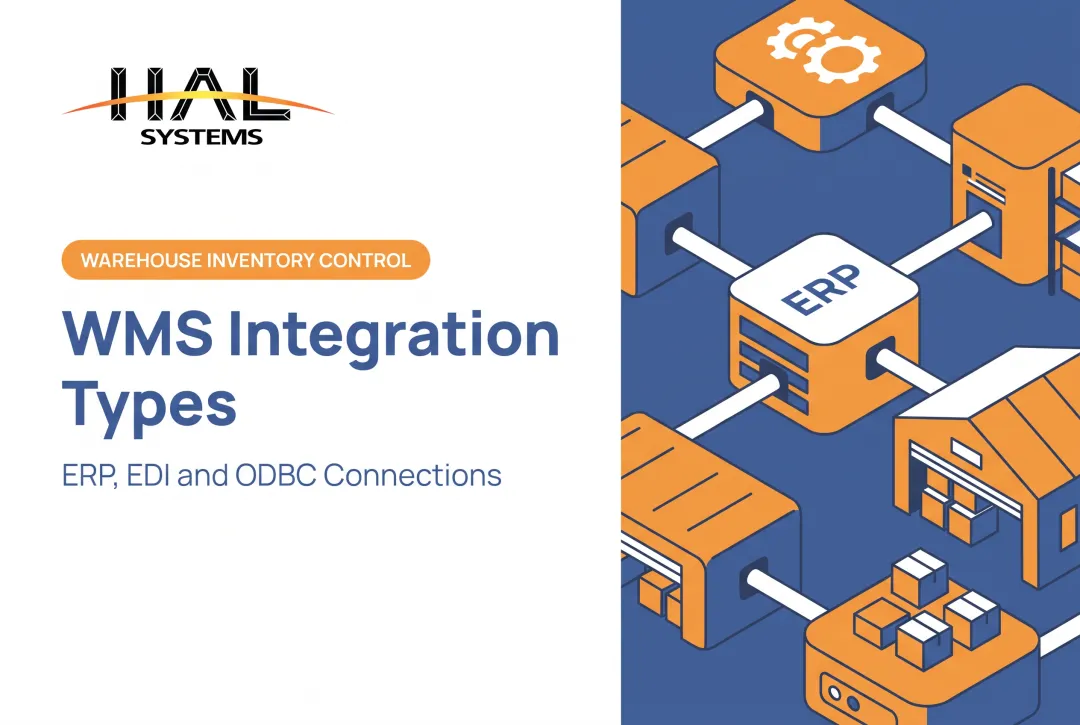
ERP owns customers, orders, purchasing, financials, and business reporting. The WMS receives work and returns inventory, shipment, and execution updates. A typical interface passes purchase orders for receiving, sales orders for picking, and shipping confirmations for invoicing, which avoids double entry.

Before committing, define:
- API or connector availability
- Which system owns master data
- Synchronization timing and whether updates must be real-time
- Error handling when a message fails
- Barcode and hardware compatibility
Consider a configurable solution for mixed requirements
HAL Traxx from HAL Systems is one option to evaluate. It is configurable software that can act as a WMS, inventory manager, asset tracker, work-in-process solution, or a combination of these. It supports barcode, RFID, and manual entry, and runs in a browser on handhelds, tablets, and smartphones.
It can also interface with ERP, accounting, shipping, and eCommerce systems through APIs, ODBC, and transfer files. HAL Systems says its configurable software can be set up in a matter of weeks. It won't suit every operation, so test it against your own requirements.
Real-World Examples and Case Studies
Named HAL Systems customer outcomes are not widely published, so the example below comes from a third party.
Locke Supply, a plumbing and heating distributor, described its path in Modern Materials Handling. It added Vocollect voice picking to its existing WMS. The article estimates order accuracy before the change at about 95%. Afterward, the distributor reported more accurate fulfillment in less time and with fewer people, though no numeric results were published.

Two takeaways:
- The outcome came from adding execution technology on top of a WMS, not from replacing the business system.
- Without published figures, treat the result as directional, not a benchmark.
Distributors with a working system but pick accuracy problems should look closely at this pattern.
If you face warehouse, inventory, WIP, or asset-tracking challenges, contact HAL Systems to discuss a configurable HAL Traxx approach.
Conclusion
ERP generally fits broad business coordination and simpler warehouse needs. WMS fits detailed warehouse execution. Many growing organizations end up with both, integrated.
Before comparing vendors, map your receiving, storage, production, picking, shipping, reporting, and integration requirements. The right system simplifies workflows and delivers usable data, without adding complexity you don't need.
Frequently Asked Questions
What is the main difference between WMS and ERP software?
ERP manages broad business processes such as finance, purchasing, and sales. WMS manages detailed warehouse execution. Both may include inventory functions, so they overlap.
Can an ERP replace a WMS?
For a simple warehouse, basic ERP functions may be enough. Complex put-away, picking, or location control usually calls for dedicated WMS capabilities.
Do small businesses need a WMS?
It depends on complexity, not size. Consider order volume, SKU and location counts, barcode needs, and what manual processes cost you. Modern Materials Handling's 2026 survey reports 93% of respondents use WMS, though it isn't a small-business figure.
Should a company use both ERP and WMS?
Often, yes. ERP keeps finance and orders, and the WMS runs warehouse tasks. An integration exchanges orders, inventory, receiving, and shipment data.
Which system is better for a 3PL?
Most 3PLs prioritize WMS for multi-client inventory, location control, and client-specific workflows. Add ERP when finance and administration need it.
How do you choose between ERP and WMS software?
Assess business functions, warehouse processes, traceability, integrations, deployment, implementation resources, total cost, and expected growth. Then shortlist systems that fit.