
ReFED's 2026 report values U.S. food waste at $325 billion in 2024. That figure spans the entire supply chain, not warehouse operations alone, but it underscores how much is riding on getting inventory handling right.
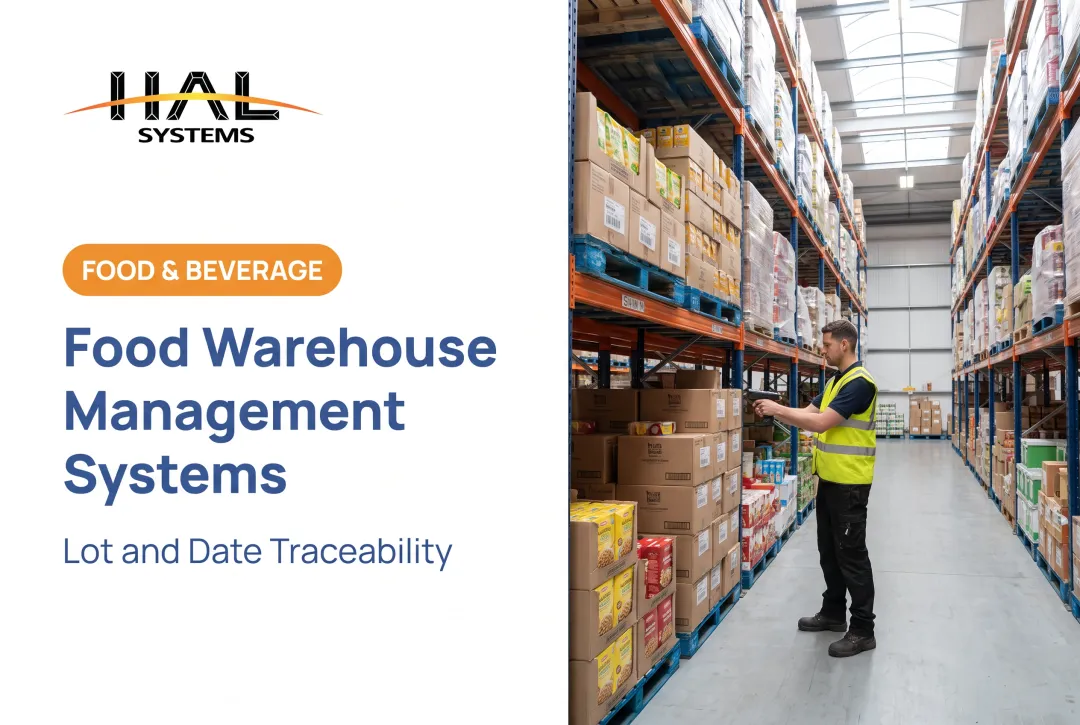
A food industry warehouse management system (WMS) connects everyday warehouse execution, receiving, storage, picking, shipping, with food-specific controls like lot traceability, expiration management, and temperature requirements. This guide covers the capabilities worth evaluating, how a WMS fits alongside your ERP, what implementation actually involves, and where configurable platforms fit smaller and mid-size food operations.
Key Takeaways
- A food-focused WMS tracks inventory by lot, batch, expiry date, location, and status
- FEFO rules, barcode scanning, and quality holds reduce waste and shipping errors
- Traceability workflows cut recall-response time from days to minutes
- The right system depends on your products, processes, and integration needs, not a generic feature list
- Food waste alone cost the U.S. supply chain $325 billion in 2024
What Makes Food Industry Warehouse Management Different?
General merchandise doesn't spoil. It doesn't carry allergens. It doesn't require a documented chain of custody from supplier to shelf. Food does, and that changes everything about how a warehouse needs to run.
Shelf Life, Batches, and Accountability
Every pallet of food has a clock running on it. Products arriving on the same truck can have different remaining shelf lives depending on when they were produced.
Add in variable storage temperatures, batch-level accountability, and the need to prove where every lot has been, and you've got a warehouse operation that basic inventory software simply wasn't built to handle.
Spreadsheets and paper logs create specific risks:
- Inaccurate stock status because updates depend on someone remembering to log them
- Missed expiration dates hiding in a back corner of the cooler
- Weak audit trails that fall apart under FDA scrutiny
- Total reliance on employee memory for which lot went where
Regulatory Context Worth Verifying
Requirements vary by what you handle and how you handle it. The FDA's Food Traceability Rule applies additional recordkeeping to foods on its Food Traceability List, not to every food product universally.
Congress has directed FDA not to enforce the rule before a proposed compliance date of July 20, 2028, per the FDA's traceability rule FAQ. Seafood HACCP, allergen labeling rules, and temperature-monitoring requirements under 21 CFR 117.206 each apply based on your specific operation.
Confirm what applies to your facility before assuming software alone closes the gap. No system replaces documented food-safety governance.
Different Operations, Different Needs
A WMS has to flex depending on what kind of food business is running it:
- Distributors need fast receiving, replenishment, and customer-specific inventory visibility
- Manufacturers need coordination between raw materials, production staging, and finished goods
- 3PLs need client-separated stock records and clear ownership histories
The system's job is to enforce approved processes, record every action, and flag exceptions for a human to review. It supports food safety decisions. It doesn't make them for you.
Essential WMS Capabilities for Food Warehousing
Not every "warehouse software" product is built for food. Here's what actually matters.
Real-Time Inventory Visibility
You need to see, at any moment, the quantity, location, lot, expiry date, and quality status of every item, including anything sitting in quarantine or in transit.
HAL Traxx, for example, provides real-time tracking of inventory and assets across multi-location operations, so a quarantine hold in one warehouse doesn't get missed by a picker in another.
FEFO Over FIFO for Perishables
First-in-first-out works fine for non-perishable goods. For food, first-expired-first-out usually takes priority, since two lots received on the same day can have very different remaining shelf lives.
A well-configured system allows authorized exceptions, such as a specific customer requirement or a production need that calls for a different lot sequence, while still flagging the override for review.
Lot and Batch Traceability
Traceability has to run unbroken from supplier receipt through put-away, internal movement, production consumption, picking, and shipment to a customer. GS1 US's guidance recommends pairing GTIN with batch or lot data so trading partners can exchange consistent identifiers.
Here's how that plays out during a recall: a supplier flags a contaminated ingredient lot. An operator searches that lot number in the system and instantly sees every finished-goods batch that used it, every location it moved through, and every customer it shipped to.
HAL Traxx is built to scan raw material lots directly to the finished-goods batches they fed, which is what turns a multi-day recall investigation into a lookup that takes minutes.

Barcode Receiving and Quality Controls
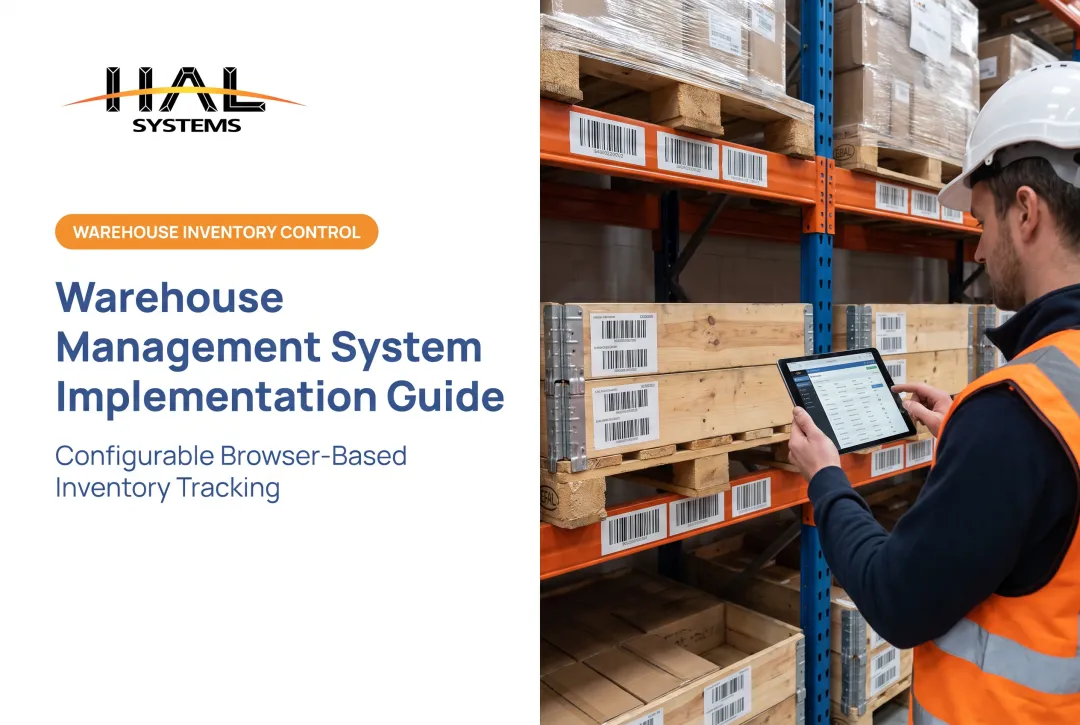
On the receiving dock, mobile scanning should validate against the purchase order, print labels, capture lot and date information, and flag discrepancies immediately. Beyond receiving, the system needs to manage:
- Temperature-zone assignment for coolers, freezers, and ambient storage
- Allergen and product segregation
- Inspection checklists, holds, and documented releases
- Damaged-goods handling and certificate tracking
Integration With Your Existing Systems
A food WMS rarely stands alone. It needs to talk to your ERP, purchasing, production, accounting, and shipping systems, plus EDI and temperature-monitoring tools where applicable.
When comparing vendors, ask specifically how integration happens: native functionality, an API, ODBC connections, transfer files, or custom development. Those are very different commitments in terms of cost and long-term maintenance.
How a Food WMS Improves Warehouse Workflows
A food WMS directs the physical work on the warehouse floor, from receiving through shipping.
Receiving Through Put-Away
Advance shipment or purchase-order data lets the system verify barcodes, run quality checks, and direct product to the right storage location automatically. That cuts manual data entry and keeps temperature-sensitive goods from sitting on a dock longer than they should.
Inventory Control and Replenishment
Cycle counting, location accuracy, and multi-unit-of-measure tracking all matter more when a lot is approaching its expiry window. Visibility across one or more warehouses means nobody is reordering stock that's already sitting in another facility.
Picking, Packing, and Shipping
System-directed pick paths enforce FEFO automatically, select the correct lot, and apply customer-specific rules. When a pick comes up short, the system should flag it immediately rather than let someone guess at a substitution.
On the shipping side, pallet and case identification, carrier documentation, and the final record linking shipped product to a customer and batch all close the traceability loop.
Measuring What Changed
Useful KPIs to track include:
- Inventory accuracy
- Order accuracy
- Pick productivity
- Receiving turnaround time
- Expiry-related waste
- Stockout frequency
- Cycle-count variance
Measure a baseline before you implement anything. Compare it to post-go-live numbers from your own operation rather than relying on a generic industry benchmark, since published surveys like WERC's don't break out food-specific performance figures.
How to Choose and Implement a Food Industry WMS
Picking a WMS without mapping your own requirements first is how companies end up paying for features they never use.
Start With a Requirements Assessment
Document your actual operation:
- Product shelf life and lot complexity
- Temperature zones and allergen controls
- Production activity, if any
- Warehouse size and order profiles
- Customer-specific requirements
- Growth plans and future sites
Build a Vendor Evaluation Checklist
Generic feature claims aren't worth much. Instead:
- Ask for a live demo using your own product flow to confirm FEFO and lot tracking actually work
- Test receiving, quarantine, expiry exceptions, recalls, and cycle counting with your own scenarios
- Review integration methods, data ownership, cybersecurity, and total cost of ownership
Plan the Rollout
Implementation touches master data, location setup, barcode standards, user roles, and integrations before a single order gets picked. A phased rollout, starting with inbound receiving before extending to picking and shipping, limits disruption and gives staff time to adapt.

Common risks worth planning for:
- Unclean item and location data that throws off reports from day one
- Unclear business rules, especially around FEFO exceptions
- Insufficient testing before go-live
- Weak staff adoption, often from skipping hands-on training
Process mapping and real user acceptance testing catch most of these before they become production problems.
Choosing a Deployment Model
Two common paths:
- Cloud spreads costs over time and offloads infrastructure management, but depends on reliable connectivity
- On-premises gives more control over systems and data, but needs in-house IT expertise
Pick the model that matches your IT capacity and growth plans.
Where HAL Traxx May Fit Food Industry Operations
HAL Traxx is a configurable platform that can be set up as a warehouse management system, an inventory-control solution, a manufacturing work-in-process tracker, or some combination of the three, depending on what your operation actually needs.
For food and beverage operations specifically, that configurability shows up in a few practical ways:
- Barcode and mobile data capture for receiving, picking, and cycle counting
- Lot and date control enforced through configurable business rules
- Scan-to-batch traceability linking raw material lots to finished-goods batches
- Reporting built around the operational data your team actually needs
- Integration with ERP, shipping, and accounting systems through APIs, ODBC connections, or transfer files
HAL Systems has built and supported this kind of software since 1983, pairing it with implementation services, Lean and Six Sigma process consulting, and ongoing support.
Deployment runs either on-premises or hosted on Amazon Web Services, and functionality can be added as your operation grows without migrating to an entirely new platform.
None of that guarantees a specific outcome for your warehouse. What's worth doing instead is requesting a workflow-based demonstration built around your own scenarios: lot receiving, FEFO picking, a quality hold, a recall lookup, and ERP synchronization. That's the only real way to see whether a platform fits before you commit to it.

Frequently Asked Questions
How do you manage a warehouse?
Warehouse management covers receiving, put-away, inventory control, storage rules, picking, packing, shipping, and cycle counting. A WMS coordinates these activities, directing workflow and recording each transaction as it happens.
What's the difference between WMS and ERP?
An ERP coordinates broader business functions like finance, purchasing, and sales. A WMS manages detailed warehouse execution. The two systems typically exchange inventory, order, and shipment data through an integration.
What is the best food ERP software?
There isn't a universal answer. Selection should depend on your traceability needs, FEFO support, quality controls, integration requirements, deployment preferences, and total cost of ownership, not a generic ranking.
What features should a food industry WMS have?
Look for lot and batch tracking, expiry management, FEFO enforcement, barcode scanning, real-time inventory visibility, quality holds, temperature-zone rules, recall reporting, and audit trails.
How does a WMS help prevent food waste and recalls?
FEFO rules and expiry alerts keep stock rotating before it spoils. Batch traceability and searchable movement histories let you isolate affected inventory and respond to a recall in minutes instead of days.